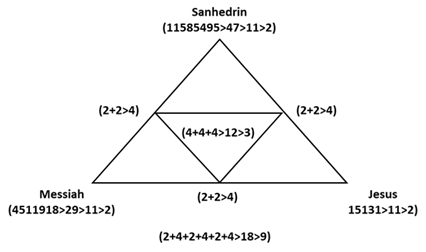
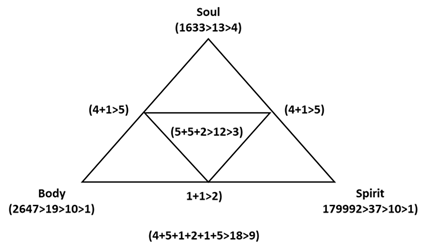
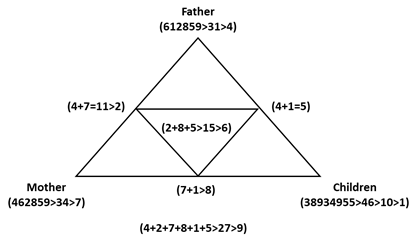
|
The Truth Seeker
Tony Stone Matthew
7:7-8 Ask
and it will be given to you; seek and you will find; knock and the door will
be opened to you. For everyone who asks receives; the one who seeks finds;
and to the one who knocks, the door will be opened. John
8:32 Then
you will know the truth, and the truth will set you free. WATCH: John Lennox
WATCH: Quantum AI Just Re-Translated the
|
Chapter Three Unlocking the Secrets
of the Cross In
his search for truth, Tony Stone sought to understand the ancient Jewish Kabbalah,
even travelling to Israel to bring reality to the Holy Bible, the story of
Jesus Christ, and the New Testament. Walking through the 5000-year-old
Jerusalem is walking through history. It’s real. Walking the 14-stations of
the Cross, to Golgotha, the “Place of the Skull”, to the “The Holy
Sepulchre”, is walking in the footsteps of Jesus Christ. Does the Kabbalah,
with its “Tree of Life” reveal anything about Jesus Christ. No, it doesn’t!
But, the Cross of the crucified Christ, the Christian “Tree of Life”, does
hold secrets, mathematical secrets, that reveal the spiritual mysticism of
God, his Son, Jesus Christ, and the Helper, the Holy Ghost. _____________________________________________________________________________________________ As we, Homo sapiens, emerged from the origins of our time, there was little need for numbers or a number system. As hunter-gatherers our focus was purely on survival. But our nature being what it is, we advanced, either by chance or by design or a combination of both, always seeking to make things better and/or easier. Even so, it wasn’t long before the basic lessons of addition, subtraction, division and multiplication were discovered. By banding together, forming groups, adding to their numbers, our species became stronger. This became evident in their struggle and ability to survive. Smaller groups were generally weaker. This basic understanding led to the formation of tribes and villages and, although tribes and villages were typically separated, they learned that cooperation was beneficial.
This led to a system of bartering and trade that in turn created a demand for currency - and number systems emerged. Along with this, agriculture emerged and flourished, then industrialization and now, today, the knowledge economy. Now, looking
back throughout history, human beings have been driven by an innate curiosity
and desire to explore the world around them. Whether it be the urge to travel
to new lands, venture into uncharted territories, or delve into the depths of
the unknown, the drive to explore is a fundamental aspect of human nature.
Discovery of the world around us, discovery of what we can accomplish, and
discovery of the small things that bring great joy, all contribute to overall
health and longevity.vc Today, everything is driven by numbers, perceived
value and language, the means of communication. The world, set on its
abstruse course, progressed in different parts of the civilizing world,
Greece, India and China more notably. Number systems that were differentiated
only by the symbols they used did however share the same numbers – an amazing
and extremely important fact. Today, our universal number system, represented
by the symbols 1, 2, 3, 4, 5, 6, 7, 8 and 9, is commonly referred to as the
Hindu-Arabic numeral system. The inclusion of 0 and the need for zero in complex
mathematics, as an essential digit, is credited to the Indian mathematician, Brahmagupta (598-668 CE). Interestingly, and we will get to it, the Law of Nine reveals that zero (0) only appears once, at the very beginning. However, there
is an apparent contradiction here regarding the number zero. To explain it,
counting is one thing and using zero in more complicated mathematical
equations is another. Homo Sapiens leaned to count soon after they appeared
on Earth about 44,000 years ago. Noah was born around 2,950 BCE. Biblical
data places the Great Flood at approximately 2300 BCE. Genesis is part of the
Torah or Pentateuch, the first five books of the Bible. Tradition credits
Moses as the Torah's author. It was probably composed around the 5th century
BCE. The Book of Genesis 6:14–16 describes the structure of the Ark. Noah's
instructions, given to him by God, was the ark had to be 300 cubits long, 50
cubits wide and 30 cubits high. Clearly the
number zero was used before Brahmagupta. Ancient measurement of length was based on the human body, for example
the length of a foot, the length of a stride, the span of a hand, and the
breadth of a thumb. 1 palm [handbreadth] (tefach) = 4 digit (etzba'ot) 1
span (zeret) = 3 palms (tefahim)
1 ell [cubit] (amah) = 2 spans (zeret), or 6 palms
[handbreadths]. Brahmagupta’s work, encapsulated in the
‘Correctly Established Doctrine of Brahma’, which details the mathematical
role of zero, rules for manipulating both negative and positive numbers, a
method for computing square roots, methods of solving linear and some
quadratic equations, rules for summing series, as well as other algebraic and
geometric computations, which have since served as the foundation of many
subsequent mathematical developments. Greek philosopher, mathematician and founder of the Pythagorean brotherhood, Pythagoras, was born around 570 BCE, is regarded by many as 'the first great mathematician' and a big influence on the work of people like Plato and Aristotle. His trigonometric theorems, including the most well-known Pythagoras’ Theory, place him as one of the most influential mathematicians in human history. Although religious in nature, formulated principles that influenced the thought of Greek philosopher Plato, founder of the Academy in Athens, the first institution of higher learning in the Western world, with his student Aristotle, contributed to the development of mathematics and Western rational philosophy, Pythagorean thought is scientific as well as metaphysical and included specific developments in arithmetic and geometry, in the science of musical tones and harmonies, and in astronomy. Plato,
born 428 BCE, considered to be one of the great philosophers who contributed much
in shaping western philosophy, founded the Athens Academy, a revered place of
learning, that was considered a centre of intellectual life at the time. The
topics of study at the Academy included philosophy, mathematics and law. Aristotle,
born 384 BCE, was a philosopher, mathematician, botanist and more, he wrote
more than 200 papers. There are at least 25 or mathematical discoveries
attributed to Aristotle, three of which, the more well-known, are: 1.
The angles at the base of an isosceles triangle are
equal. 2.
The circle encompasses the greatest area for a
given circumference. 3.
The apparent size of objects is proportional to
their distance from the observer. H. Peter Aleff, in his work, Ancient Creation Stories told by the Numbers,
says: “Numbers do not present themselves to
our senses as
unequivocally as geometric figures do. They are by far more abstract and are not part of our perceivable environment. Yet these abstractions exist and, moreover, they have certain regular properties. Numbers cannot be connected with concrete reality the way geometry is, and so they easily slide into the supernatural. They are not in
nature but determine its manifestations through certain ratios and relationships. From this it follows that they rank above nature.
On
the other hand, these “super-natural” and “nature-ruling” numbers are also a
means to understand that nature.” “Mathematics is the alphabet with which God has written the universe,” said Galileo Galilei, an
Italian astronomer, physicist and engineer, and sometimes described as a polymath, an individual whose knowledge spans a substantial number of subjects, and known to draw on complex bodies of knowledge to
solve specific problems. He perhaps was expressing his understanding of
how fundamental mathematics is to
our very existence. This ancient saying is never more relevant than today, where mathematics is
the key to
so much of
our modern life. But there is
no simpler, more fundamental way of expressing the universe than through the basic ideas of sets and subsets, equality and inequality, which in turn lead to the concept of quantification, which lead to the concept of value and numbers, and once we have numbers, the numbers of all things, the rest of
mathematics seems to
bloom from all around us. The great principle of life In the beginning God created the heaven and the
earth, and all things, concrete and abstract, in it. This simple statement is
far more complex than one can imagine. In the final analysis, maths is the
language of the universe. With it, we can understand the basic construction
of our home in the cosmos. You might be thinking to yourself, 'why is the
universe a mathematical place'. The answer is simply 'that is the way our
universe is', because that is what God designed maths to do. I say God
because we are creatures of the universe and the universe didn’t create
itself. The 2nd Law of Thermodynamics, of entropy, which is simply a measure
of disorder, contrasts with that which we actually see in the universe -
order. So, if there is order it must be divinely created. Scientists argue
the “Big Bang”. And yet, there is no random chaos of an uncontrolled system
in our universe. An unanswered question is: What was before and
caused the big bang? Something must have existed? God? An alternate concept
to the big bang, yet congruent with it, is that God did create the universe,
and all the laws that govern the universe. This is the great principle of
life. Quantum physics has helped researchers understand
a number of the mysteries of the Universe. For example, how gravity and
centrifugal force work and their relative effect given distance. It's helped
to come across clues as to where in fact the legislation of the Universe and
time lie and also the way they interact. If you are really interested in this
subject, I can recommend the following book: Mathematics for Quantum
Mechanics: An Introductory Survey of Operators, Eigenvalues, and Linear
Vector Spaces by John David Jackson. Most important is quantum physics explains the
omnipresence (everywhere at all times) omnipotence (all-powerful),
omniscience (all-knowing) and of God. Another general rule is to have a mind like a
statistician. The average statistician is logical and systematic, preferring
to completely think through results and finds before making any conclusion.
These folk look for patterns – trends, cycles and relationships between
apparently unrelated things -as in joining the dots. Their trained eyes see
things the average person does not see. This enables them to “see” the future
using mathematical techniques. An old statistician develops the mental
ability to see what young statisticians have to compute. The Jewish Kabalah
The ancient Kabbalistic map of creation, the Tree
of Life, (right) that dates back at more than a thousand years in Jewish
esoteric tradition. The Tree of Life is a sacred symbol in many cultures of
the world, but here it is used as a path to knowledge linking the twenty-two
letters of the Hebrew alphabet with the twenty-two paths of the Tree of Life
and the astrological houses. Each resulting word forms a rich and powerful
wheel symbol that reflects a segment of the tree, depicted on a card in the
oracle deck. Follow the reading sheet to lay the cards in the zigzag line of
creation, and consult the guidebook to receive guidance on any life issue.
Both the oracle and the tree are highly structured, and from this framework
of harmony comes wisdom that you will value forever.
In his widely read 1943 paper, A Theory of Human
Motivation, this Kabbalistic revelation is probably what guided American
psychologist Abraham Maslow in developing his ‘Hierarchy of Needs’ model,
which, although different, bears remarkable similarities and is probably a
more accurate reflection of the human psyche. Nonetheless, someone who
desires spirituality differs from someone who pursues materiality. Image: Abraham Maslow’s Hierarchy of
Needs
We know how to fulfill
our earthly and human needs but when the desire for spirituality awakens in
us, and we do not have the answers, we look to others for those answers.
Herein is a danger. Desire opens a chink in our armour and, even if
we think we are in control, it can lead us to being manipulated by other
people who, depending on their motivations, abilities and knowledge, may
cause us, those who seek spirituality, to being left discontented and
discouraged. Then there are those shallow thinkers who want quick answers and
lack the patience to spend the time looking for the answers, and as a result
are left continuously frustrated. Kabbalists say, “At the point when the desire for
spirituality awakens, and people want answers, they should seek them from the
Kabbalah, which was specifically designed to provide the way to those
answers.” I disagree. If you want answers, look to Jesus
Christ, and Unlock the Secrets of the Cross. As it says in the Book of John
3:16, “For God so loved the world that he gave his one and only Son, that
whoever believes in him shall not perish but have eternal life.” Mathematical design in the
Holy Bible Early Christian leaders repeatedly condemned the magical use of numbers and denounced any system of philosophy that was based on an exclusively numerical basis. Even so, they almost unanimously regarded the numbers of Holy Scripture as full of mystical meaning, and they considered the interpretation of these mystical meanings as an important branch of exegesis, the critical explanation or interpretation of religious text. Why the hypocrisy? There are two answers to this inconsistency. The first is that humanity is arrogant and believes it is Godlike, all knowing and all powerful. We believe this because in Genesis 1:26 God said, “Let us make man in our image, after our likeness.” We also believe we are Godlike because of what we have achieved – curing disease, transplanting organs, building massively powerful computers, putting robots on Mars, cloning animals, and now being able to resurrect extinct species, and so on. The list of our achievements is substantial. But, even with these achievements, we fall far short of being Godlike. We are egotistic, easily corrupted by power and money, float in a state of complacency, tell lies, always justify our actions even when we are wrong, exploit the poor and lack humility, amongst the many other failings we have. We push these to the back of our minds and continue on our daily business believing always that others won’t see our shortcomings. But it is this blindness, which, driven by our arrogance, will always see us remain imperfect, and blind to the mysteries contained in Holy Scripture. The second answer is found in the truth that knowledge is power, but part knowledge is dangerous, especially in an ill-equipped and/or arrogant mind. Then again, full knowledge can be dangerous in an evil mind. We are warned of this in 1 Corinthians 15:33 where it tells us not to be deceived by evilly conceived communications and/or corrupt people with good manners. Politicians and swindlers in particular! The knowledge that most people lack knowledge is often seen as an opportunity to exploit, and it is - especially by political, business, social and so-called religious leaders, as well as criminals. It is because of these reasons that early Christian leaders stood firmly against astrologers, stargazers and prognosticators. By and large, they were right to do so because the average person’s level and extent of education was exactly that – poor and average. IQ tests are made to have an average score of 100. Psychologists revise the test every few years in order to maintain 100 as the average. Most people (about 68 percent) have an IQ between 85 and 115. Only a small fraction of people have a very low IQ (below 70) or a very high IQ (above 130). Nonetheless, any and every journey of discovery results in and requires much learning, which, in the process, is fraught with pitfalls and dangers. Discovering the meaning of numbers is no different. And, it is these dangers, of an emotional and spiritual nature, that open us to manipulation and exploitation by forces of evil, forces that we are generally not equipped to deal with. But discovery must remain a driving force behind the development and advancement of humanity. Including its spirituality. We would not be where we are right now if it were not for the brave souls and inquisitive minds that had the courage to pursue the discoveries that have elevated our knowledge of the world and all things in it, on it, and beyond it. Although not as well-known as Aristotle or Isaac Newton, Leonhard Euler (1707-1783) is one of the most brilliant and noteworthy mathematicians the world has ever known. Euler was responsible for developing mathematical notation and the concept of 'function'. He was also responsible for developing breakthrough theories in calculus, topology, number theory and graph theory. Although there are many mathematicians who have made contributions to the knowledge of mathematics since earliest times, and that humanity has discovered and opened a whole new world of understanding using the contributions of Pythagoras, Brahmagupta, Euler and others, these three men stand out above the rest in terms of the significance of their contributions. The typical movie scene depicting mathematicians as disheveled, bespectacled, white-coated men in front of a blackboard, filled with mathematical formulae, is not far from the truth. Mathematics has become extremely complex in these our modern times. People like Albert Einstein, the theoretical physicist who developed the general theory of relativity, and Carl Sagan, the astrophysicists who introduced and made famous the ‘Cosmos’ TV series, did this. They, and others, will always be remembered for their contributions to humanity’s enlightenment. And, in speaking of our enlightenment, Carl Sagan, in his TV series, used the analogy of what we see down in the street compared to what we see from atop a tall building to illustrate why we need lift our comprehension of the world and the universe we live in so that our understanding and knowledge can grow. Unfortunately, fear and prejudice, and a closed mind, will keep you down at street level. However, we need to be simultaneously bold and cautious, weighing everything we see and hear with due consideration. Think before you act. If someone is educated, wealthy or of social standing and appears to be a wise and gracious person, and a leader, it does not necessarily mean they are. There are many wolves in sheep’s clothing. Some are brash, some are subtle. As in Matthew 7:16, we judge a tree by the fruit it bears. But, failing to open a door, for fear of the unknown, will keep you ignorant of the truth of what is behind the door, and what lessons that can be learned. If someone builds on your fears, it is probably because of their fears, or it is to control you. Do not be held back. Go forward, discover. Every step forward in humanity’s progress to date is because individuals were brave enough to open doors. Psalm 23 says, “Even though I walk through the valley of the shadow of death, I will fear no evil, for you are with me; your rod and your staff, they comfort me.” And again, Psalm 27:1 says, “The Lord is my light and my salvation; whom shall I fear? The Lord is the stronghold of my life; of whom shall I be afraid.” But, what does the Bible say? Does the Bible condemn astrology and numerology? In the Old Testament, it does. In the New Testament it contradicts the Old Testament. So, it is important that we understand this contradiction. In the book of Deuteronomy 18:10-12 it warns the people of Israel about witches and wizards, diviners and enchanters, consulters of spirits, charmers and necromancers. What is interesting, in examining the original Greek and Hebrew text, is that it places all these people into one category – those who practice witchcraft and follow the ‘dark side’. These types of people are an abomination to God because they are evil and mislead the weak-minded, emotionally vulnerable and the ignorant. A little further on, in Deuteronomy18:18-22 it tells us that God will appoint a prophet, someone from their midst, someone just like them, and will tell this prophet what to say to the people of Israel. God also says that he expects the people to listen to this prophet. They in turn ask how they will know this person is God’s prophet and not one of the abominables. As to whether I am a prophet, the answer is no. What I do know is in 1980 God called me to write a book (of which this chapter is a part). Something I initially did not want to do. I became the veritable Jonah and ran away from the task. The reason for my reluctance can be found in the Book of Revelation 22:18-19 wherein it says, “For I testify unto every man that heareth the words of the prophecy of this book, If any man shall add unto these things, God shall add unto him the plagues that are written in this book. And if any man shall take away from the words of the book of this prophecy, God shall take away his part out of the book of life, and out of the holy city, and from the things which are written in this book.” Even so, my knowledge of many things increased. I went from being a computer programmer and bookworm to being a newspaper journalist to an editor of an engineering and a mining magazine, honing my writing and research skills. Eventually, I put away my disobedience and obeyed God’s calling and embraced my Nineveh. And, in so doing, I pray that I will neither add to or take away from the prophecies of the Holy Bible, but merely provide a contextual interpretation. In speaking of so-called servants of God, it is said that in listening to and reading a person’s body language, if a person exalts him or herself, and not God first and foremost, then they are most likely a false prophet, one of the abominables. Or, they could be an just arrogant and ignorant person possessing a little knowledge and who purports to be a prophet. Either way, you don’t want to follow these people. The prophet Daniel, the fourth of the major prophets and the same that was thrown into the lion’s den, and lived, was chosen by God. Taken into captivity by the Babylonian king, Nebuchadnezzar, Daniel was recognized by his own people and by his captors as being a prophet. When Nebuchadnezzar’s son Belshazzar became king, he summoned Daniel to interpret some writing that mysteriously appeared on a wall. In Daniel 5:11 Belshazzar’s wife says, and I quote, “There is a man in thy kingdom, in whom is the spirit of the holy gods; and in the days of thy father, light and understanding and wisdom, like the wisdom of the gods, was found in him; whom the king Nebuchadnezzar thy father, the king, I say, thy father, made master of the magicians, astrologers, Chaldeans, and soothsayers.” To this day, Daniel is regarded by both the Jews and the Christians as being one of the great prophets. Abraham is another. In the Old Testament book of Genesis, we read in Genesis 12:2-3, “I will make you into a great nation, and I will bless you; I will make your name great, and you will be a blessing. I will bless those who bless you, and whoever curses you I will curse; and all peoples on earth will be blessed through you.” This passage communicates an important message. It tells us that God’s covenant with Abraham and his seed is fixed, as it is with the “fixed laws” of heaven and earth, which include mathematical laws. His faithfulness in keeping His covenant with Abraham and his seed, and with the laws of the universe, demonstrates the same faithfulness He will show in His covenant of redemption. Turning to the New Testament, 1 Corinthians 12: 4-11 speaks of gifts of the Spirit. It says, in 12:4, “Now there are diversities of gifts, but of the same Spirit.” It then continues, in 12: 7-11, to define what these gifts are. It says, “But the manifestation of the Spirit is given to every man to profit withal. For to one is given by the Spirit the word of wisdom; to another the word of knowledge by the same Spirit; To another faith by the same Spirit; to another the gifts of healing by the same Spirit; To another the working of miracles; to another prophecy; to another discerning of spirits; to another divers kinds of tongues; to another the interpretation of tongues: But all these worketh that one and the selfsame Spirit, dividing to every man severally as he will.” Prophecy and the discernment of spirits are also two of the ‘gifts’ that the abominables practice!? No wonder the people of Israel, as mentioned in the Book of Deuteronomy, were scared to make a mistake. They still are, and it is probably why they rejected Jesus Christ. In 1 John 4:1, we are warned again. It says, “Beloved, believe not every spirit, but try the spirits, whether they are of God because many false prophets are gone out into the world.” Examples abound. The 1978 Jonestown Massacre, in which 918 “Christians” perished, is but one example where people followed a false prophet. So, if good and bad have the same ‘gift’, where does that leave us? I explain this contradiction below: ·
If what we receive is from God, then it is good, and for His purpose and exaltation. ·
If what we receive is from the World, then it is corrupt, and for our own purposes and gratification. So, how do we know the difference? How do we protect ourselves? As in Ephesians 6:11, it says, “Put on the whole armour of God that ye may be able to stand against the wiles of the devil.” How do we do this? 1. We need to become active Christians. In order to do so, we need to take three very specific steps: 1.1. Accept Jesus Christ as our Lord and Saviour. 1.2. Be born again, of the water and of the Spirit. 1.3. Pick up our cross (we all have them) and follow Him. 2. We need a thorough knowledge of the Bible. 3. We need to pray (regularly, and earnestly). A basic rule is: If what you are told to do or believe in is something that cannot be validated in scripture and, to be more specific, if our Lord Jesus Christ, or His Apostles, did not say it, then it must be regarded with due circumspection. In Romans 12:2 it says, “Do not be conformed to this world, but be transformed by the renewal of your mind, that by testing you may discern what is the will of God, what is good and acceptable and perfect.” As shown below, the numbers of the Cross of Christ, and their meaning, are perfect. The Law of Nine is perfect because it is a natural law, and exists across the universe. The Law of Probability is perfect because it discerns likelihood from unlikelihood, truth from falseness and reality from improbable imagination. Numbers in scripture In the book of Daniel, 12:4, it says, “But thou, O Daniel, shut up the words, and seal the book, even to the time of the end: many shall run to and fro, and knowledge shall be increased.” Ever so true! However, in examining the original Greek and Hebrew texts, the words ‘shut up’ are used in the figurative sense, not in the literal sense. The verse also infers it will be new, modern knowledge that will ultimately unlock the secrets of book. Until then, people will run to and fro looking for the key but will not find it - because they will be looking in the wrong place. The best place to hide something is in the open, where people won’t look because they are either blinded by arrogance and/or take things at face value. Even so, if God has given you the gifts of knowledge and wisdom, then it is for His purpose. In so doing, as it says in Matthew 7:7, “Ask, and it shall be given you; seek, and ye shall find; knock, and it shall be opened unto you.” Jesus would not have made these statements if was not the truth. Then, if we are to believe the Kabbalah, Pythagoras and Augustine of Hippo, are numbers used to carry divine significance? What does the Bible say? In the Book of Revelations, 13:18, it says, “Here is wisdom. Let him that hath understanding count the number of the beast, for it is the number of a man, and his number is Six hundred threescore and six.” This is a profoundly significant verse. It attributes great significance to a number, and relates it to a man, to his name. In the original Greek and Hebrew text the word ‘count’ is used in the context of ‘computing’ or ‘calculating’ the number using pebbles. The fact that it relates to a name means that letters and words carry a mathematical value, which can be computed. This is truly an amazing revelation. But does it stop there? No, it doesn’t. At this stage I need to point out that I will not be discussing Michael Drosnin’s book, The Bible Code. I have not even read the book. Secret, hidden messages in scripture as postulated in this work do not resonate with me. I am therefore not qualified to offer an opinion. My work has centered on Israel, Judaism, Christianity and the 1611 KJV Bible, and two perhaps lesser-known Biblical mathematicians. The first, an Anglican clergyman, Biblical scholar and hyper-dispensationalist, Dr Ethelbert William Bullinger, who was born in England in 1837, pursued a different approach to Panin. Bullinger spent years researching scripture to identify the associations between content, of what was being said, and numbers. Using statistical methods, through his identification of patterns, he was able to attribute meanings to numbers. His findings were published in his book, Number in Scripture: Its Supernatural Design and Spiritual Significance. His work resonates with me, my being statistically minded, and has enabled me to pursue the natural Law of Nine in unlocking some of the secrets contained in the Holy Bible. The second, a Russian mathematician, Dr Ivan Panin, born in 1855, emigrated to Germany and then to the United States. In 1890, he claimed to have discovered numerical patterns of sevens in the Hebrew text of the Psalms, and soon afterwards in the Greek text of the New Testament. In 1899 Panin sent a letter to the New York Sun challenging his audience to disprove his thesis that the numerical structure of scripture showed its divine origin. Panin, while certainly on to something, did not understand or perhaps appreciate the enormity of his quest. Until his death in 1942, he devoted over 50 years of his life to painstakingly exploring the numerical structure of the Scriptures, and generated over 43,000 hand-penned pages of analysis. A sampling of his discoveries was published, and is still being published today. Yes, he has his antagonists, as we all do. Table 1: Bullinger’s number/word associations
One of these secrets is the meaning of the number 153, a number that has taxed the ingenuity of some of the greatest of Bible students, even from the earliest times. And, as far as I know, until now, it has remained a mystery. As Bullinger said, “All have felt there must be something deeply significant and mysterious in this number, from the solemn way in which it is introduced in John 21:11 where it tells us how Simon Peter went up and drew the net to land it full of great fishes, one hundred and fifty and three." In the preface to his book, Bullinger wrote, “It would be blasphemy to suppose that such a work could be complete, for it would assume that the wonders of this mine could be exhausted, and that its treasures could be all explored! I must, therefore, be content with the setting forth of general principles, and with giving a few examples from God's Word which illustrate them, leaving others to extend the application of these principles and search out illustrations of them for themselves.” Humble words indeed, and wise nonetheless. Through my own research, over 42 years, I have added to Bullinger’s work, shown in Table below. In my research I used Rick Meyer’s comprehensive e-Sword KJV+ Bible tool, which gives me Greek and Hebrew translations, and the Law of Nine. The results of which are reflected in a Table further on. The Law of Nine As a cautionary note, and to neutralize my antagonists, what I have discovered using the Law of Nine is merely the tip of the iceberg. There is still much that I do not understand, even after 44 years of study. Nonetheless, and keeping in mind that discoverers need to be bold but cautious, and Christians need to validate, we move on. The first thing we need to understand about the Law of Nine is that it was created by God, not by me or by anyone else for that matter. It was there and just needed to be discovered. In the Book of Colossians, 1:16-17, it says, “For by Him were all things created, that are in heaven, and that are in earth, visible and invisible, whether they be thrones, or dominions, or principalities, or powers: all things were created by him, and for him: And he is before all things, and by him all things consist”. It is interesting that our number system, the basic building block of all mathematics, which is universal, developed simultaneously in different parts of the world. It simply cannot be said that this was purely coincidental. It also did not happen purely by chance either. How do we draw this conclusion? The Law of Probability, for one, dictates otherwise. The Rule or Law of Nine, and we are not talking about Bridge or treating burn wounds, has been used by Biblical scholars for many years. If we take the set of natural numbers, sequentially from one to infinity, and reduce each number to a single digit, by adding a number’s integers together e.g. 2016 = 2+0+1+6 = 9. Zero (0) appears once, at the very beginning, with the number sets 1 through 9 repeat, consecutively, on through to infinity. Table 2: Sequential example
The fascinating thing about the Law of Nine is that it works with decimal numbers as well. Each set begins with 1 and ends with 9, and so on, all the way through infinity. When Bullinger wrote his book he focused on the old Hebrew and Greek alphabets. While these do apply in our modern setting, in certain instances, it is the English alphabet that is more relevant today. Why? Because English, like mathematics, as we have already said, is a universal language. Brazilian academic, Carlos C Torres, in a technical essay, as only an academic can, argues the case for English to be regarded as the universal language. He says, “The causes for this universality are well known and understandable. English first began to spread during the 16th century with British Empire and was strongly reinforced in 20th by USA‘s world domination in the economic, political and military spheres, and by the huge influence of American movies. The concept of a universal language is more significant only now, in the era of world mass communication. It is the world’s media language, the language of cinema, TV, pop music and the computer world. By a lucky coincidence, English is one of the simplest and easiest natural languages in the world to learn.” The modern English alphabet is a Latin alphabet consisting of 26 letters. Applying the Law of Nine to this alphabet, we have the following natural fall of letters to the number values 1 through 9: Table 3: English alphabet letter values
Does this table have any immediate significance? Let us take the 18th verse from the Book of Revelations 13, where it talks about calculating the number of the beast. Quite clearly, the beast is the Anti-Christ who, by description may be likened to the fox – a sly, amoral, cowardly and self-seeking animal whose cunning is a necessity for survival. If we look at the table above, we see that the numbers 666 spell out the word FOX. Is this a coincidence!? Possibly. Too obvious? Perhaps. Nonetheless, fascinating! Number notation The word TIME equates to the numbers T=2, I=9, M=4, E=5, which, by adding each number together 2+9+4+5=20 that in turn reduces to the single digit 2 by adding 2+0. The notation for this is 2945>20>2. All the numbers in the notation TIME>2945>20>2 carry an important relevance to the interpretation of the notated word. In this case, using Bullinger’s number/word associations, the descriptors expectancy, division, order and balance well describe time. What is important to
remember is the positivity, neutrality or negativity of the words and their
meanings. For example: GOOD=7664>23>5 and BAD=214>7. The word BAD
has 7 as its root value, which certainly does not carry the meaning
“Spiritual Perfection” but quite the opposite. God and Jesus Christ The word God, 764, equates to 17>8. Taking these numbers and the factors that make up this number, 1, 7, 10, 8, we have the descriptors king, lord, master, powerful, primacy, origin, oneness, spiritual perfection, order, balance, regeneration and renewal, which gives a more comprehensive yet basic understanding of the meaning of the word God. And, from our knowledge of scripture, these descriptors carry the essence of the nature and character of God. To illustrate another number/word association, this time using the words Jesus Christ, it is interesting to see that the numeric value equates to 43>7, being Jesus 11>2 and Christ 32>5. The relationship between Jesus and division, in number 2, is found in the Book of Matthew 18:11, where Jesus says, “For the Son of man is come to save that which was lost.” Clearly, he came to divide, believers from non-believers. This is emphasized in the Book of John 14:6 where Jesus says, “I am the way, the truth, and the life: no man cometh unto the Father, but by me’”. It is a choice between following Jesus or not. When we decide to follow Him it divides us from those who are lost and places us with those who are saved. It’s a choice. One or the other! The negatives of 11, disorder and disintegration, were more about the Jewish Council (Sanhedrin’s) fears of Jesus whom they saw as a threat to their authority. This is confirmed in the Book of John 11:47, where it tells us, “Then gathered the chief priests and the Pharisees a council, and said: What do we do, for this man doeth many miracles.” Quite amazing in way. They, the Jewish Sanhedrin, knew of the miracles of Jesus Christ yet did not believe that he was the Messiah, despite the prophetic words of their prophet Isaiah. Their minds closed because of arrogance and fear of breaking customary law. The Christ is the manifestation of grace, of favour, by God through His kindness, consideration and love, and given to us in the form of mercy, clemency and pardon. In the Book of John 3:16 we read, “For God so loved the world, that he gave his only begotten Son, that whosoever believeth in him should not perish, but have everlasting life.” The Christ thus carries the number (32/5), being grace, and Jesus the choice you have to make to follow Him (11/2), the divisor. Together, Jesus + Christ equates to 7, which, from Bullinger’s numbers, denotes spiritual perfection. This is corroborated in the Book of Ephesians 4:13 where it says, “Till we all come in the unity of the faith, and of the knowledge of the Son of God, unto a perfect man, unto the measure of the stature of the fullness of Christ.” Israel and Jerusalem We can take our number analysis to a deeper level. This, however, requires a detailed study of history. Not just the Bible. A very important fact, in the study of the humanity’s future, is to understand and accept that the Jews, Israel and Jerusalem are God’s chosen. In the Book of Genesis 17:9 it says, “And God said unto Abraham, thou shalt keep my covenant therefore, thou, and thy seed after thee in their generation.” It is quite clear that the Jews, and ourselves being the seed of Abraham, are God’s chosen. But God leads His grand plan with the Jews because of his covenant with Abraham. And, because of this, God promised the Jews their own land. As we read in the Book of Exodus 12:25, it says, “And it shall come to pass, when ye be come to the land which the LORD will give you, according as he hath promised, that ye shall keep this service.” Looking back at history, through time since Christ, Israel was not always Israel. Conquered by Muslims in 636 CE, Israel became and was Palestine until 1948 when the state of Israel was reestablished by British declaration. The prophet Zechariah (520 BC) saw this coming. Because of the disobedience of the Jews, God became angry with Israel and said, as we read in the Book of Zechariah 7:14, “But I scattered them with a whirlwind among all the nations whom they knew not.” This happened after the 70 CE Roman destruction of the Second Temple. The fascinating thing is that Jacob (+/- 1700 BCE), named ‘Israel’ by an angel, which means ‘God contended’, also saw the scattering and return of the Jews coming more than a thousand years before Zechariah saw it. As we read in the Book of Genesis 28:13-15, it says, “And, behold, the LORD stood above it, and said, I am the LORD God of Abraham thy father, and the God of Isaac: the land whereon thou liest, to thee will I give it, and to thy seed; And thy seed shall be as the dust of the earth, and thou shalt spread abroad to the west, and to the east, and to the north, and to the south: and in thee and in thy seed shall all the families of the earth be blessed. And, behold, I am with thee, and will keep thee in all places whither thou goest, and will bring thee again into this land; for I will not leave thee, until I have done that which I have spoken to thee of.” It is because of this last sentence that I say God leads his grand plan with the Jewish people. God is God. If God makes a covenant, He will not break it. Therefore, it remains, fixed in place, and in time – a covenant, which he made with Abraham. God said, in the Book of Genesis 17:5, “Neither shall thy name any more be called Abram, but thy name shall be Abraham; for a father of many nations have I made thee.” As to Jerusalem, since the time of Joshua (+/- 1400 BCE), Jerusalem has been the capital city of Israel. This is confirmed in the Book of 1 Kings 14:21 where it says, “Jerusalem, the city which the LORD did choose out of all the tribes of Israel, to put his name there.” Contextually, and looking at the word/number associations, we can understand what the numbers tell us about Israel and Jerusalem. ISRAEL> 919153>28>10>1 28: People, children 10: Order, balance 01: Beginning, origin, oneness, primacy 02: Division, difference, opposition, enmity, oppression 08: Regeneration, renewal 20: Expectancy, waiting for the Messiah JERUSALEM>159311354>32>5 32: Leaders, governance 05: Grace 03: Solid, real, substantial, complete, entire 02: Division, difference, opposition, enmity, oppression 30: A balanced measure of – time, length, quantity If you have followed modern history, you will be able to draw the conclusion that the number meanings of the words Israel and Jerusalem fit perfectly and well describe the historical nature and character of these two entities over the time span they have been in existence. Coming out of my 44 years of research, I have filled in a couple of the blank spaces in Bullinger’s work, which he invited us to do anyway. Table 4: The writer’s additions to Bullinger’s work
There is one more. The number 153 mentioned earlier, and discussed later. You can pursue this course of study at your leisure, but a word of caution. Know your Bible, don’t rush, be painstakingly thorough and think. Don’t jump to conclusions or make assumptions. Only use the Bible, preferably the old 1611 KJV Bible and Rick Meyer’s comprehensive e-Sword KJV+ Bible tool, as your reference. Later translations have proved to be different in some passages compared with the original Greek and Hebrew text. The Cross, the Holy Trinity and the Holy Ghost My research has focused on three things – the Cross of Christ, the Holy Trinity and the future of Israel – using what we know from history as fact, and the insights given me. For those who have read Andrew Murray’s The Secret of the Cross, which is well worth reading, and following, my unlocking yet more secrets of the cross is done from a mathematical perspective. The premise upon which I worked in determining the ‘Numbers of the Cross’ was that, if the Kabbalah applied to the Old Testament and that Jesus Christ, as the divisor taking us into the new age, then the Cross, being the symbol of Christianity, is the key to unlocking the future. Therefore, because of the perfection of Jesus Christ, its number system needs to be perfect too. If so, it would have to reflect the Law of Nine. In so doing, it will confirm Friar Patrick J McHugh’s writings that the center of Christianity is the Cross of Christ. For many of us, who don’t listen, who stubbornly know better and use disbelief as an excuse to live a secular and carnal life, we come to God through what Friar McHugh calls fire, a difficult and personal journey through the trials of life. Like the prodigal son, we turn away from God. For some, we return to His care and protection, for others they remain in the fields feeding pigs. Figure
1: The number system of the Cross of Christ
As you can see, the Cross is mathematically perfect, in terms of the Law of Nine. More importantly, it correlates perfectly with the number of books
in the New Testament - 27. The location assignment of each number is done in
accordance with scripture. The Numbers
One and Eight At the head of the Cross the numbers 1 and 8 represent: The number one (1) holds
significant symbolic meaning, often representing unity, singularity, and
the oneness of God. It emphasizes the idea of singleness, uniqueness,
and absolute unity, especially in reference to God’s sovereignty and
singularity in the universe. a)
God’s
Oneness and Uniqueness ·
The number 1 is most notably connected to the oneness
of God in the Bible. In the Old Testament, this is emphasized in the
Shema, a central prayer in Jewish faith: § Deuteronomy
6:4: “Hear, O Israel: The LORD our God, the LORD is one.” This
declaration affirms that God is singular, unified, and indivisible,
contrasting with polytheism (the belief in many gods) that was prevalent in
many surrounding cultures. b)
Unity and
Singular Focus ·
The number 1 also symbolizes unity within
the body of believers or the Church. This unity is seen as the body of
Christ in the New Testament. § 1
Corinthians 12:12-13: “For just as the body is one and has many members,
and all the members of the body, though many, are one body, so it is with
Christ.” Here, the concept of "one" highlights
that despite diversity within the Church, there is a singular purpose
and unity in Christ. c)
First in
Importance ·
In some contexts, 1 signifies primacy
or pre-eminence. For example, God is often described as the first or
the most important. § Isaiah
44:6: “Thus says the LORD, the King of Israel and his Redeemer, the
LORD of hosts: ‘I am the first and I am the last; besides me there is no
god.’” This is a declaration of God's supremacy and unique
position in the universe. d)
The First
Commandment ·
The number 1 also
refers to the First Commandment in the Ten Commandments, where God
commands His people to worship Him alone, affirming the oneness of
their allegiance. § Exodus
20:3: “You shall have no other gods before me.” This commandment
emphasizes the singular devotion to the one true God, highlighting His exclusive
role as the object of worship. e)
The First
in Creation ·
In the creation narrative, God’s work begins with
the first day, underscoring the idea that everything originates from
God. Genesis 1:1 begins with the phrase: “In the beginning, God
created the heavens and the earth.” This "beginning" is the
first in a sequence of acts, establishing God as the source of all things. f)
Jesus
Christ as the One ·
In the New Testament, Jesus is frequently
portrayed as the one and only Son of God. He is described as the unique
mediator between God and humanity. § John 14:6: “I am
the way, and the truth, and the life. No one comes to the Father
except through me.” In this sense, Jesus emphasizes His uniqueness
and singularity in fulfilling God’s plan for salvation. g)
One as a
Symbol of Wholeness ·
The number 1 can also represent wholeness
or completeness. For example, the one loaf of bread used in the
Lord’s Supper (the Eucharist) symbolizes the oneness of believers in
Christ. §
1 Corinthians 10:17: “Because
there is one bread, we who are many are one body, for we all partake of the
one bread.” This illustrates the unity of the Church in Christ, where all
believers, despite being many, are united in one faith. h)
The First
Fruits ·
The first fruits of the harvest are given
to God as a symbolic act of dedicating the first portion to Him. This
concept underscores the primacy of God in every area of life. § Exodus
23:19: “The best of the firstfruits of your
ground you shall bring into the house of the LORD your God.” So, in summary, in biblical symbolism, the number 1 primarily
represents the oneness of God, His singular nature, and His
pre-eminence above all. It also highlights the unity of the Church and
the exclusive worship of God. Whether referring to God Himself, the
first commandment, or the unity of believers, the number 1 stands for
singularity, exclusivity, and the foundational truth of God's absolute
supremacy. The number eight (8) holds
significant symbolic meaning, often associated with new beginnings,
resurrection, and renewal. It is seen as a number that marks a transition
from completion (as symbolized by the number 7) to a fresh start or a new
cycle. Below are some key biblical associations with the number 8: a). New Beginnings and Resurrection
b). Circumcision on the 8th Day
§ Genesis
17:12: “He who is eight days old among you shall be circumcised, every
male throughout your generations, whether born in your house or bought with
your money from any foreigner who is not of your offspring.”
c). The Resurrection of Jesus
d). The New Creation
e). The Number of the "Eighth" Person
§ 1 Peter
3:20: “When God's patience waited in the days of Noah, while the ark
was being prepared, in which a few, that is, eight persons, were brought
safely through water.”
f). The Feast of Tabernacles (Sukkot)
g). The Number of Superiority in Some Early
Christian Writings
h). The New Covenant
In summary, in biblical symbolism, the number 8 signifies new
beginnings, renewal, and resurrection. It is associated
with the resurrection of Jesus, the renewal of creation, and the idea of a
new covenant in Christ. It marks the end of one cycle and the beginning
of another, symbolizing a transition into a new era or fresh
start in God's plan for humanity. The Numbers
Two and Seven At the right hand (of God) the numbers 2 and 7 represent: The number two (2) often symbolizes witness, unity, or division,
depending on the context. Here's a deeper look into its significance: a). Witness
§ "By
the mouth of two or three witnesses every word shall be established." (Matthew
18:16; Deuteronomy 19:15) b). Unity and Partnership
§ Marriage:
"Therefore a man shall leave his father and mother and be joined to
his wife, and they shall become one flesh." (Genesis 2:24) § Jesus
sent His disciples out two by two to spread the gospel, emphasizing teamwork
and support. (Mark 6:7) c). Division or Contrast
·
In Genesis 1, God divided the light from the
darkness (Genesis 1:4). ·
Cain and Abel represent two opposing ways of
life—obedience versus rebellion. d). Jesus’ Nature
In summary, in biblical symbolism, the number 2 in the Bible is
rich with meaning, highlighting themes of balance, duality, division,
cooperation, and the confirmation of truth. Its interpretation often
depends on the specific context of its use in Scripture. The number seven (7)
symbolizes perfection, completeness, and divine fulfillment.
It holds deep spiritual significance and is associated with God's work and
covenantal relationship with humanity. Here’s an overview: a). Completeness and Perfection
b). Divine Fulfilment and Covenant
§ For
example, the rainbow, a symbol of God’s covenant with Noah, is associated
with seven colors (Genesis 9:13-15). § God
commanded the Israelites to celebrate the Sabbath on the seventh day as a
sign of their relationship with Him. c). Spiritual Significance
d). Symbol of Judgment and Completion
§ Seven seals,
seven trumpets, seven bowls, seven churches, etc., all symbolize the fullness
of God's divine plan (Revelation 5-16). e). Cycles and Sacred Time
§ The
Sabbath (7th day). § The Year
of Jubilee (after 7 cycles of 7 years; Leviticus 25:8-10). In summary, in Biblical symbolism, the number 7 is a recurring theme
in Scripture, symbolizing divine perfection, spiritual completeness, and
fulfilment of God's work. It reflects God's sovereignty and order,
serving as a reminder of His presence and plan. The Numbers
Three and Six At the left hand
of God are the numbers 3 and 6 that represent: The number three (3) often
symbolizes divine completeness, perfection, and unity. It is frequently
associated with the presence of God, significant spiritual truths, and the fulfillment of His plans. Here’s a breakdown: a). Divine Completeness and Perfection
b). Resurrection and New Life
§ Jesus was
resurrected on the third day, a central event in Christianity (Luke
24:7; 1 Corinthians 15:4). § Jonah
spent three days and three nights in the belly of the great fish,
foreshadowing Christ’s resurrection (Matthew 12:40). c). Divine Encounters
§ God
called Samuel three times before he recognized His voice (1 Samuel 3:8). § Jesus prayed
three times in the Garden of Gethsemane before His crucifixion (Matthew
26:39-44). d). Symbol of Witness
§ Jesus
took three disciples (Peter, James, and John) to witness His Transfiguration
(Matthew 17:1-9). § The
Apostle Paul emphasized that a matter is established by two or three
witnesses (2 Corinthians 13:1). e). Judgment and Completeness
In summary, in Biblical symbolism, the number 3 in the Bible is deeply
tied to God’s nature, resurrection, divine completeness, the Trinity and
affirmation of truth. It often underscores pivotal moments and reinforces
the unity and perfection of God’s plan. The Numbers
Four and Five At the foot of the Cross the numbers 4 and 5 represent: The number six (6) is often associated with humanity, imperfection,
and work. It symbolizes things that fall short of divine perfection
(represented by the number 7) and is frequently tied to human weakness or
incompleteness. Here's an overview: a). Humanity and Creation
b). Labor and Incompletion
§ God
commanded humans to work for six days and rest on the seventh, showing 6 as a
number of labour but not completion (Exodus 20:9-11). § It
reflects the ongoing effort of humanity, contrasted with God’s perfect rest. c). Imperfection and Falling Short
d). Evil and Rebellion
e). Other Biblical Uses
In summary, in Biblical symbolism, the number 6 in the Bible is
closely tied to human effort, imperfection, and the temporal nature of
life. It serves as a reminder of mankind's need for God to complete and
perfect what is incomplete or flawed. It also warns against pride and
self-reliance that lead to rebellion against God. The number 4 is often associated with universality,
completeness, and the world. It frequently appears in contexts that
denote the four corners of the earth or the totality of the created world.
Here are some key ways the number 4 is used symbolically in the Bible: a). The Four Corners of the Earth
b). Creation and Completeness
c). The Four Living Creatures in Revelation
d). Four Horsemen of the Apocalypse
e). The Four Rivers of Eden
f). Four Gospels
Symbolic Meaning: The
number 4 is often connected to stability and universality,
emphasizing the idea that something is total, universal, and complete in
scope. It is frequently associated with the earthly realm, the natural
order, and the fullness of God's creation or His
divine actions in history. In summary, in Biblical symbolism, the number 4 is commonly linked to
the idea of completeness, universality, and the totality of God's creation.
It speaks of the fullness of the earth and the scope of divine action. The number five (5) is often associated with grace,
God's goodness, and divine favour. It represents God's provision for
humanity and is frequently connected to blessings, redemption, and covenantal
relationships. Here's a detailed look: a). Symbol of Grace and Favor
§ The five
books of the Law (Genesis, Exodus, Leviticus, Numbers, Deuteronomy)
represent God's covenant and instruction, which are acts of His grace. § In the
story of David and Goliath, David chose five smooth stones (1 Samuel
17:40), symbolizing divine provision and grace in defeating the giant. b). Provision and Redemption
c). Blessing and Abundance
d). God’s Hand and Power
e). Other Notable Biblical References
In summary, in Biblical symbolism, the number 5 in the Bible often
represents God’s grace, favour, and provision. It highlights His
unmerited kindness and the abundance of His blessings, as well as the order
and redemption He provides for humanity. The Number
Nine in the middle of the Cross, the number 9, where it all ends,
and/or begins: The number nine (9) is often
associated with divine completeness, finality, and the fruit of the Spirit.
It reflects God’s judgment, spiritual fruitfulness, and the fulfilment of His
plans. Here's a detailed look at its significance: a). Finality and Completeness
§ Jesus
Christ died at the ninth hour (3 PM) to complete the work of salvation
(Mark 15:34-37), symbolizing the finality of His earthly mission. § The Day
of Atonement, the most solemn of Jewish holy days, begins at sunset on the ninth
day of the seventh month (Leviticus 23:32). b). Fruitfulness and the Spirit
c). Judgment and Consequences
§ In the
Old Testament, the number 9 often appears in contexts where God’s judgment or
finality is pronounced. For instance, the destruction of Jerusalem occurred
in the ninth year of King Zedekiah's reign (2 Kings 25:1). d). Divine Multiples
e). Other Biblical References
In summary, in Biblical symbolism, the number 9 in the Bible is
associated with spiritual fruitfulness, divine completeness, and the
finality of God's purposes. It reflects the maturity of God's work in His
people, the fulfillment of His plans, and the
ultimate expression of His judgment or grace. There
are nine (9) Gifts of the Spirit, as in 1 Corinthians 12:1-11, and nine (9)
Fruits of the Spirit, as in Galatians 5:22-23. As a Christian, its much like
the “what” and the “how”. Table 5: The Gifts of and Fruits of the Spirit
God is a God
of Love with love being the first fruit. The word LOVE=3645>18>9. What
is interesting is, as it says in John 3:16, “For God so loved the world
that For God so loved the world that he gave his one and only Son, that
whoever believes in him shall not perish but have eternal life.” So, love
is at the center of the Cross. Coincidence, or design? In the Old
Testament the Book of 1 Samuel is the nineth book. 1 Samuel chronicles the
beginning of Israel's monarchy, following the lives of the prophet Samuel,
the ill-fated King Saul, and God's ultimate choice of David as king. Several
themes feature prominently. The book is about providence, God’s divine
guidance wherein He repeatedly makes everyday events work for His purposes. In the New
Testament the Book of Galatians is the nineth book. This book reminds Jesus'
followers to embrace the Gospel message of the crucified Messiah, that
justifies all people through faith and empowers them to live like Jesus did.
It’s the death of the old self and the birth of the new. The next number in the Law of Nine sequence is 1, where it all begins again – on EARTH
(51928>25>7) or in Heaven (851455>28>10>1) or Hell (8533>19>10>1), whatever choice you made. In the Book of
John 3:3 Jesus answered Nicodemus saying, "Truly, truly, I say to you,
unless one is born again, he (or she) cannot see the kingdom of God." In
John 3:5 5-6 Jesus answered, saying, “Verily, verily, I say unto thee,
except a man be born of water and of the Spirit, he cannot enter into the
kingdom of God. That which is born of the flesh is flesh; and that which is
born of the Spirit is spirit.” In Geometry, a
triangle is a three-sided polygon that consists of three edges and three
vertices. The most important property of a triangle is that the sum of the
internal angles of a triangle is equal to 180 degrees (9). This property is
called angle sum property of triangle. Triangles are
the strongest shape there is. Any weight placed on them is evenly distributed
on all 3 sides. They represent geometric sturdiness; no matter how much
weight you put on any side; it will not break. It's resilient and we really
must recognize and admire this fact. The triangle also reflects the strength
of the Trinity. The Trinity? We know about God, and Jesus Christ but there is a third, the Spirit of God, the worker of God’s will in men and women, even children. Jesus Christ, the Son of God, always spoke with reverence about the Holy Ghost. In John 14:15-17 Jesus said, “If ye love me, keep my commandments. And I will pray the Father, and he shall give you another Comforter, that he may abide with you forever. Even the Spirit of truth whom the world cannot receive because it seeth him not, neither knoweth him, but ye know him, for he dwelleth with you, and shall be in you.” Here Jesus is clearly talking about the Holy Ghost, the third person of the Holy Trinity. To understand how God, Jesus Christ and the Holy Ghost exists everywhere, all of the time, you need to understand quantum physics, which provides a description of the physical properties of nature at the scale of atoms and subatomic particles
within the context of Georg Cantor’s Set Theory, a branch of mathematical
logic that explains the universe. In this regard, an excellent book to read that will provide an understanding of how the Holy Trinity is omnipotent, omniscient, and omnipresent, is George Johnson’s book, A Shortcut Through Time: The Path to the Quantum Computer – the neural network and the
interconnectedness of all things. Interconnectedness
is a powerful concept that has been explored for centuries by scientists,
philosophers, and spiritual leaders. It suggests that everything in the
universe is connected, and our actions and choices can have a ripple effect
on the world around us. By understanding that we are all part of the same
interconnectedness of life, we can live with more compassion, empathy, and
understanding, and make better choices that benefit not only ourselves but
also others. As Marcus Aurelius, Roman emperor, stoic philosopher and the
last of the Five Good Emperors, once said, “All things are implicated with
one another, and the bond is holy.” Recognizing and embracing this this
interconnectedness can help us live more meaningful and fulfilling lives. There is a dire warning against against speaking negatively about the Holy Ghost. In Matthew 12:32 Jesus said, “And whosoever speaketh a word against the Son of man, it shall be forgiven him: but whosoever speaketh against the Holy Ghost, it shall not be forgiven him, neither in this world, neither in the world to come.” Thus, we have the Holy Trinity, which, like the Cross should reflect the Law of Nine. The Holy Trinity The primacy (285 8637 2995927>82>10>1) of the Holy Trinity (82>10>1) is unquestionable. It unlocks the mystery of the number 153. It is the Holy Ghost, who completes the Trinity. Again, the Law of Nine fits. As it says in John 14:16, “And I will pray the Father, and he shall give you another Comforter, that he may abide with you forever.” The first mention we have of the Holy Ghost, also called the Holy Spirit (8637 179992>61>7), is in the Book of Psalms. King David (2957 41494>45>9), then king of Israel, although chosen by God, was just like you and me - a sinner. In Psalm 51, David laments his sinful nature and asks God for mercy and redemption. In verse 11 he cries out, “Cast me not away from thy presence; and take not thy Holy Spirit from me.” Herein is a message for all, because at one or other time we will or have or will need to cry out as David did. God will hear you, and will help you, on His terms and in His time. In talking to His disciples about the hardened hearts of men, Jesus said, in Luke 11:13, “If ye then, being evil, know how to give good gifts unto your children: how much more shall your heavenly Father give the Holy Spirit to them that ask him?”
The 1611 King James
Version of the Holy Bible uses the term “Holy Ghost while modern English
translations describe the third person of the triune God as the “Holy
Spirit.” Using the term “Holy Ghost” we get: Further analysis of the Holy Trinity and the Unholy Trinity For every positive there is also a negative. This
is true across the spectrum of life. It's about choosing the positives and
working against the negatives. If we take the Holy Trinity values of God, Jesus Christ and the Holy Ghost and add them together, we get a result of 72>9. The inner
triangle gives 36>9. Together the outer and inner triangles add up to
108>9. Figure
2: The Holy Trinity
The Holy Trinity is a central doctrine of Christianity,
describing the nature of the one true God as being three distinct persons in
one divine essence. These three persons are: a). God the Father
b). The Son (Jesus Christ)
§ "In
the beginning was the Word, and the Word was with God, and the Word was
God." (John 1:1) § "The
Word became flesh and made his dwelling among us." (John
1:14) c). The Holy Ghost (Spirit)
§ "But
the Helper, the Holy Spirit, whom the Father will send in my name, he will
teach you all things." (John
14:26) § "Do
you not know that your body is a temple of the Holy Spirit?" (1
Corinthians 6:19) The Nature of the Trinity
Scriptural Basis
§ The Great
Commission: "Go therefore and make disciples of all nations,
baptizing them in the name of the Father and of the Son and of the Holy
Spirit." (Matthew 28:19) § Jesus’
Baptism: All three persons are present—the Father speaks, the Spirit
descends, and the Son is baptized (Matthew 3:16-17). In
summary, the Holy Trinity is the Christian understanding of one God in three
persons—Father, Son, and Holy Spirit. It emphasizes God’s unity,
diversity, and relational nature, central to understanding His work in
creation, redemption, and sanctification. If we take the Holy Trinity values of God, the
Father, the Son and the Holy Ghost and add them together, we get a result of 153>9. The inner triangle gives 27>9. Together
the outer and inner triangles add up to 207>9. Figure 3: The Holy Trinity
Table
5: The last additions
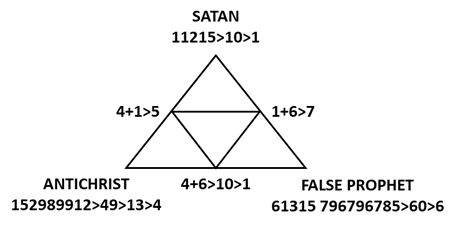
In applying the Law of Nine to the Unholy Trinity of Satan, the Antichrist and the False Prophet, we get an interesting result. Figure
4: The Unholy Trinity
The outer triangle gives us a result of 11 (disorder, disintegration) and the inner, inverse triangle gives us a result of 13 (rebellion, apostacy, corruption, revolution). The unholy trinity is the counterfeit or
parody of the Holy Trinity (Father, Son, and Holy Ghost). The unholy trinity
represents forces of evil that oppose God and His kingdom. It consists of: a). Satan (The Dragon)
b). The Beast from the Sea
c). The Beast from the Earth (The False Prophet)
The Purpose of the Unholy Trinity
In summary, the unholy trinity—comprising Satan, the beast from the
sea, and the beast from the earth—is a perversion of the Holy Trinity. It
symbolizes the forces of evil working in tandem to oppose God and deceive
humanity, especially during the end times, as depicted in Revelation. The Sanhedrin
trial of Jesus The Sanhedrin
trial of Jesus refers to the trial of Jesus before the Jewish judicial and
legislative body of Israel, the Sanhedrin, following His betrayal by Judas
Iscariot and His arrest in Jerusalem’s Garden of Gethsemane. During his trial
before the Sanhedrin, after an initial period of silence, Jesus confirmed he
was the Christ, the Son of the God, the Messiah, and added that they would
see Him, the Son of Man," seated at the right hand of God," a
declaration that the high priest deemed blasphemous. So, judged guilty of
blasphemy, Jesus was delivered to Pontius Pilate (7652931 793125>
60>6), the fifth (6+5>11>2) governor of the Roman province of
Judaea. The Gospels describe Pilate as succumbing to pressure from religious
leaders and a clamoring crowd, despite believing Jesus was innocent of any
crime. Roman soldiers performed the physical act of crucifixion, while Jewish
religious leaders and the crowd's shouts for Jesus' death also played a role
in the events.
The
Bullinger/Stone number/word associations involved in this trilogy
What
patterns/associations/linkages do you see to the events described above? At the moment
of Jesus' death on the cross, a violent earthquake split rocks, tombs burst open,
and the curtain of the Jewish temple was torn in two from top to bottom,
signifying a new spiritual era. Simultaneously, darkness covered the land
from 12:00 noon until 3 p.m. A Roman centurion, who had pierced Jesus’ side
with a spear, confirming Him dead, and witnessing these events, declared
Jesus truly was the Son of God. The Bible views birth, life, and
death as distinct, appointed stages with overarching divine timing and purpose,
with human life possessing a sanctity from its earliest stages, even before
physical birth, and ultimately culminating in resurrection and eternal life
for believers through Jesus Christ. Key passages like the Book of Ecclesiastes 3:1-8 describe the cycle of life with
"a time to be born and a time to die," emphasizing God's sovereign
control over these events. While death is a certainty, the New Testament
offers hope for overcoming it through faith in Christ, as seen in passages
like the Book
of John 11:25-26,
which promises eternal life to believers.
The Bible describes human
life as a precious gift from God, emphasizing that true love, characterized
by patience, kindness, and selflessness (1 Corinthians 13:4-7), is central to
human experience and spiritual growth. Marriage is presented as a foundational,
sacred union designed by God to be a lifelong partnership where a husband and
wife become "one flesh," leaving their families to form a new,
unified family (Genesis 2:24). Husbands are called to love their wives
deeply, as Christ loved the church, and wives are to respect their husbands,
fostering a relationship of mutual love, support, and spiritual oneness.
The Bible
describes life as a gift (of grace) from God, to be lived in Him, with His
abundant life and eternal life found through faith in His Son. In the Book of
Ephesians 2:8-9 it says, “For by grace are ye saved through faith and that
not of yourselves. it is the gift of God.” Genesis 2:24 –
Therefore, shall a man leave his father and his mother, and shall cleave unto
his wife: and they shall be one flesh. In the Book of Matthew 19:6 It says,
“Therefore they are no more two, but one flesh. What therefore God hath
joined together, let not man put asunder.” In the book of
1 Corinthians 7:39 it says, “The wife is bound by the law as long as her
husband lives; but if her husband be dead, she is at liberty to be married to
whom she will; only in the Lord.
The scriptural role of
the father: 1.
Spiritual leader: The most important job as a father is pointing his kids toward a
personal relationship with God through Jesus. In the Book of Deuteronomy 6,
Moses emphasized the importance of parents, especially fathers, in answering
spiritual questions and providing spiritual guidance. 2.
Loving husband: The greatest thing a father can do for his children is to love his
wife, their mother. In the Book of Ephesians 5, Paul reminds fathers
is to love their wives like Jesus loves the church. That underscores just how
seriously God takes this question. 3.
Encourager: It’s the father’s job to motivate and encourage his children.
Passages as in the Book of Ephesians 6:4 and Proverbs 22:6 remind us that
when we encourage children to be their best, they will respond. When you have
their backs, your children will feel secure and will find it easier to move
toward becoming the people God created them to be. 4.
Role model: If you set the example and follow God and live a principled life
with honesty and integrity, your children will probably follow your example.
If you are the husband God calls you to be, your sons will see what kind of
men they should become, and your daughters will know what kind of men to seek
in their dating and marriage relationships. 5.
Dreamer:
Most fathers have dreams for their kids. While you don’t want to live
vicariously, through the successes of your children, you do want them to
realize their potential and live a God inspired life. Healthy dreaming,
developing a vision of the future, is completely appropriate and a necessary
part of a child’s life and the fatherly role in encouraging the child. 6.
Mentor:
It’s impossible to overstate the importance of your role as a mentor. In
fact, the older your children get, the more important this becomes. As
children develop from kids and reach their teen years and then start moving
toward adulthood, your role as a father changes. That is natural, and that is
healthy. You shift from being the one who tells them what to do to the one
who offers advice, wisdom and guidance. That is what mentors do, and it’s a
big part of what fathers do. 7.
Provider: In his first letter to Timothy (the Book of 1 Timothy 5:8),
the Apostle Paul told his spiritual “son” that a believer who doesn’t provide
for his family is worse than a pagan. Those are pretty strong words about the
role of a father. Of course, Paul was talking primarily about financial and
physical provision, and that is important. You need to show them that, like
God, the ultimate Provider, it is a father’s job, as best he can and is able,
to provide the family’s Earthly needs. The scriptural
role of the mother: According to
the Bible, a wife and mother's role involves loving her
husband and loving and nurturing her children, training them in the ways of
the Lord, and being a source of wisdom and strength. The Bible emphasizes
mothers as significant caregivers and educators, instilling faith and
character, reflecting the characteristics as in the Book of Proverbs 31
woman who is dignified, wise, and provides for her household. Key aspects
include prayer, modeling a biblical worldview, and teaching children to honor
God and love their neighbour. 1.
Nurturing and Loving: A special "Mother Love.” The Bible describes a unique and
affectionate "mother love" (the Book of Titus 2:4-5) that
involves caring for, nurturing, and meeting the needs of children, treating
them as unique gifts from God. 2.
Providing comfort: The Book of Isaiah 66:13 compares God's comforting presence
to a mother's comfort for her child, highlighting the role of mothers in
providing solace and emotional support. 3.
Teaching and discipleship: Training in God's ways. Mothers are called to
raise their children in the "training and instruction of the Lord"
(Book of Ephesians 6:4). 4.
Imparting wisdom: The Bible encourages mothers to speak with wisdom and kindness, and
the in the Book of Proverbs 31:26 states, "She opens her mouth
with wisdom, and on her tongue is the law of kindness". 5.
Modeling faith: Godly mothers lead by example, showing contentment in Christ and
teaching their children to pray and trust in God, as seen in Timothy's
upbringing by his mother Eunice and grandmother Lois (Book of 2 Timothy
1:5). 6.
Stewardship and resourcefulness: Household management. The Book of
Proverbs 31 woman is depicted as diligently overseeing her household,
showing a commitment to work and resourcefulness. 7.
Using God-given gifts: Godly mothers are described as stewarding their
skills, talents, and possessions for their families and the Lord. 8.
Honouring and respect: Demonstrating mutual
honor. Scripture encourages both children to honor their mothers (Book of
Ephesians 6:2) and husbands to praise their wives (Book of Proverbs
31:28), underscoring a reciprocal spirit of appreciation within the
family. 9.
A Legacy of blessing: The impact of a godly mother is reflected in her children's future,
with the Book of Proverbs 31:28 noting, "Her children arise and
call her blessed". The scriptural
role of children: In the
Christian Bible, the primary scriptural role of children in the family is to
obey, honor, and respect their parents, which is seen as a form of reverence
for God's design for the family. Children are also viewed as a source of joy
and a heritage from God, meant to bring happiness to the family. Their duty
is to co-operate with and support their parents, and their upbringing
involves being taught the ways of the Lord to remain faithful as they grow. Christian
Perspective 1.
Honour and obey: In the Holy Bible, the
fourth of Ten Commandments given to Moses by God on Mount Sinai, it says, in
the Book of Exodus 20:12, “Honor your father and mother." This is
repeated in the Book of Ephesians 6:1-3 wherein it states,
"Children, obey your parents in the Lord, for this is right.” 2.
Responsibility to respond: In the Book of Colossians 3:20, children
are instructed to respond to the care and provision they receive from parents
by bringing happiness to the family and living in a way that is pleasing to
the parents and the Lord their God 3.
A gift from God: In the Book of Psalm 127:3 it says, "Behold, children are
a heritage from the Lord, the fruit of the womb a reward". This verse is
found in the Bible and expresses the idea that children are a precious gift
from God and a reward for parents, rather than something earned or deserved.” 4.
Upbringing and teaching: The Bible instructs parents to raise children
in God's ways through consistent training, instruction, and by example, while
also fostering their emotional well-being by avoiding provocation and
discouragement. Key verses emphasize diligent teaching (the Book of
Proverbs 22:6), leading by example (the Book of Titus 2:7-8), and
creating a positive home environment where spiritual truth is paramount, and
remembering that God, through his Word, the Bible, is the ultimate teacher. 5.
Respect for parents: Many texts in the Bible emphasize the duty of children to respect
and honor their parents, so that, as it says in the Book of Ephesians
6:1-3, “it may be well with thee (the child), and thou mayest live long
on the earth" 6.
A Source of happiness: Children should be bringers of joy and
happiness to the family unit. 7.
A sacred trust: In Christianity, children are seen as a blessing from God and a
sacred trust for the parents to nurture and one day, with confidence, release
them into the river of life. Children need to recognize this responsibility
and ensure their behaviour congruent their parents sacred trust. The purpose of life The first book of the Bible, the Book of Genesis, was written around 1450 BCE and the last book of the Holy Bible, the Book of Revelation was written in 96 CE. Since then, 1927 years have passed. The Bible shows us God's character and provides us God's revelation of himself to his people. In each section of the Bible, we see God's holy, unchanging, faithful, gracious and loving character. The Bible teaches humanity that the purpose of life is to live and let live. Societal living is possible when there are communal harmony and feeling of brotherhood among its members. The institutions of family and marriage contribute to the harmonious living in a society. Peaceful coexistence is the key to a successful life. The Bible also teaches us that God gave His people, you me and everyone, the Ten Commandments, or laws, to live by. These commandments require us to love God and treat others with respect. We shouldn't lie, steal, kill, or commit adultery (the Book of Exodus 20:7-17). God expects us to follow the Ten Commandments everyday of our lives, not just when we feel like it. Satan seduces humans into sin or falsehood. He is behind all conflict. He loves chaos, rebellion, apostacy, corruption and revolution. You need to be constantly aware and on the lookout for Satan and his subterfuge. You need to put on the full armor of God (Ephesians 6:10-18), the Belt of Truth, the Breastplate of Righteousness, the Gospel of Peace, the Shield of Faith, the Helmet of Salvation, and the Sword of the Spirit. Number meanings of Biblical people and places in the Holy Bible Sir Isaac Newton's third law states that for every action, there is
an equal and opposite reaction. This principle can be extended to
all aspects of
life and is
called the “positive and negative effect,” which are two opposite sides of
a scale -
negative through neutral to positive. As
the effect applies to a specific set of people, circumstances and/or emotions, you can only be
on one side of this scale at a given point in time, meaning you can be experiencing one type of affect to a certain degree (from extremely mild to extremely strong), but not be on the other side of
the scale at
the same time (for a specific issue). You can have multiple issues with all or
some on opposite sides of the scale. This brings us
to the set of natural numbers, which includes negative as well as
positive numbers, which means that the meanings of numbers can be positive or negative. So, in determining the interpretation and number meanings of
words, we need to keep this is mind and know that the meanings, in
cases where the positive interpretation cannot apply, will be
the equal opposite, the antonym of
the positive word, and a contextual fit. The words Heaven and Hell both have
a root value of one (1) but these words mean totally opposite things –
destinations in the afterlife. Primary factors also have an interpretive role. Knowing your Holy Bible will assist you with the correct interpretations. Table 6: Number meanings of Biblical people and places in the Holy Bible
The three destinations for humanity are Earth,
Heaven or Hell. Adding the values for the outer triangle we get 45>9 and
the inner triangle 18>9. Figure 5: Humanity’s Destinations
In the beginning In the Book of Genesis 1:27, on the sixth day, it
says, “So God created mankind in his own image, in the image of God he
created them; male and female he created them.” How then do the numbers
add up in Genesis. Man (415>10>1), the beginning of humanity, and woman
(56415>21>3), who completes the two halves that make up the whole, who
together fulfil God’s command, “Be fruitful and increase in number; fill
the earth and subdue it.” And, we know the story of Adam
(1414>10>1), the first human, and Eve (545>14>5) all too well.
Besides God, and all the created animals in and on the Earth and in the
waters, was the serpent (1597552>34>7), who beguiled Eve and through
her drew Adam into sin (195>15>6). The outer triangle here computes to
13>4 (rebellion on Earth) while the inner triangle computes to 17>8
(repeating, regenerating, never-ending sin). Israel, and the numbers As Jesus Christ prophesied in Luke 21:6, “These
things (the Temple) which you see—the days will come in which not one stone
shall be left upon another that shall not be thrown down.” in 66 CE, the
Jews led a revolt and occupied Jerusalem, initiating the first Roman-Jewish
war. In 70 CE the Romans reclaimed Jerusalem and destroyed the Second Temple.
As a consequence, the Jews were scattered amongst the nations of the world. The Prophet Ezekiel predicted some 2,500 years
ago that Israel would return and be restored to their homeland as one unified
country. The Book of Ezekiel 34:11–24 says, ‘For thus says the Lord God:
“Indeed I Myself will search for My sheep and seek them out. As a shepherd
seeks out his flock on the day he is among his scattered sheep, so will I
seek out My sheep and deliver them from all the places where they were scattered
on a cloudy and dark day. And I will bring them out from the peoples and
gather them from the countries, and will bring them to their own land.” The process began in Russia in 1881 (18>9),
with the first pogroms against the Jews. In 1917 (18>9) the League of
Nations passed the Balfour Declaration, a resolution to re-establish a Jewish
state, Israel (919153>28>10>1). And, in 1948 (22>4), the first of
two occurrences took place with the formation of the State of Israel. The
second occurrence, the repossession of the Holy City, Jerusalem
(159311354>32>5), in 1967 (23>5), which together computes to a root
value of 9. Fifty years after 1948, Israel celebrated its Jubilee in 1998
(27>9). This Jubilee year, 1998, is the only year that the numbers 2:999,
3:666, 6:333, 9:222 and 18:111 occur as factors of the base number – 1998 is
a very unique number. You can draw your own conclusions. In 2017, 50 years
after 1967, the United States recognised Jerusalem as the capital of Israel. In 1977, the Nineth Knesset of Israel was
elected. In 1977, Jerusalem was hit by the first of many subsequent
earthquakes, perhaps a forerunner to a 2027 earthquake that will strike
Jerusalem. A top Israeli scientist with the Geological Survey of Israel said
in 2023 that the deadly earthquake in Turkey and Syria should serve as a
wake-up call for Israel, which he predicted will experience a major quake “in
our lifetime.” Assuming that the Temple Institute has everything
in place to rebuild the Third Temple (than they publicly admit) it could
conceivably be achieved within three years. The great Euphrates River (537891251 99459>77>14>5) Prophecy In the book of Revelation 16:12 (spiritual
completeness and divine order) prophecy, it says, “And the sixth angel poured
out his vial upon the great river Euphrates; and the water thereof was dried
up, that the way of the kings of the east might be prepared.” The Euphrates
River is at risk of drying up due to climate change. Temperatures in
northeastern Syria have risen by one degree Celsius compared to 100 years
ago, and average rainfall has decreased by 18 millimetres per month per
century. The Iraqi Ministry of Water Resources warns that the river could be
totally dry by 2040, or before. The Beast (25112>11>2) In the Book of Revelation 13:18 (note the chapter
and verse reference) it says, “Here is wisdom. Let him that hath
understanding count the number of the beast: for it is the number of a man;
and his number is six hundred threescore and six.” That’s 666. The Third
Temple must exist in order for the antichrist (1529389912>49>13>4)
to desecrate it. In summary So, let us
summarise what we
have established so
far. You have seen the mathematical
perfectness of the Cross of Christ and the Holy Trinity. You have seen the
number/word associations, and the relevance of these associations. You now
understand their meaning. You know, from the Law of Probability that this is
not just simple coincidence but intentional design. Such harmonised
perfectness just does not just happen. However, I have only scratched the
surface of this complex subject. More research needs to be done. And, having
said this, I will leave it for another time, another place, and perhaps a
book. The prophet Isaiah foretold, 740 years BCE, the coming of the Messiah, his crucifixion and resurrection. In total, according to Dr David
Reagan’s book there are 108 (>9) prophecies about the birth, life, crucifixion and resurrection of
Jesus Christ. All
were fulfilled 100%. Mathematics and astronomy professor at Pasadena
City College, Dr Peter Stoner, says that the probability of just eight of the
108>9 prophecies being fulfilled 100% is 1 in 1017 or 1 in
100,000,000,000,000,000. That’s one in one hundred quadrillion! This is
equivalent to finding one specific coin in
a layer of
R5 coins laid across the face of South Africa that is 34
cm deep. The prophecies
of Jesus Christ, spoken in the Garden of Gethsemane and as mentioned in the
Book of Matthew
24 and the Book of Mark 13, have occurred or are occurring as we speak and as seen from a comprehensive analysis of
the International Disaster Database maintained by
the Université chronique
de Louvain in Brussels who have been collecting data since 1400 CE, every one
of Christ’s prophecies is being fulfilled since the middle of the 20th
century – with one exception. The first prophecy was fulfilled in 70 CE as
ordained. The Holy Bible (8637 29235>45>9) records
the 37 (10>1) miracles that Jesus Christ (15131 389912>43>7)
performed before witnesses, friends, unbelievers and antagonists. From
healing the sick, the blind, cripples, lepers and the dead, historical truths
that cannot be denied, coupled with the 100% fulfilment of the prophecies
about Him and His prophecies regarding the end times, Jesus Christ is the
Messiah. His return is not far away. As it says in the Book of Matthew 24:37, “As
it was in the days of Noah, so it will be at the coming of the Son of Man.” However, as in the parable of the ten virgins,
Matthew 25, keep watch. In so doing, and as it says in Matthew 7:7-8 “Ask and
it will be given to you; seek and you will find; knock and the door will be
opened to you. For everyone who asks receives; the one who seeks finds; and
to the one who knocks, the door will be opened.” John 8:32 “Then you will
know the truth, and the truth will set you free.” HOME | CONTENTS | NEXT CHAPTER |
|||||||||||||||||||||||||||||||||||||||||||||||||||||||||||||||||||||||||||||||||||||||||||||||||||||||||||||||||||||||||||||||||||||||||||||||||||||||||||||||||||||||||||||||||||||||||||||||||||||||||||||||||||||||||||||||||||||||||||||||||||||||||||||||||||||||||||||||||||||||||||||||||||||||||||||||||||||||||||||||||||||||||
|
|
|
|||||||||||||||||||||||||||||||||||||||||||||||||||||||||||||||||||||||||||||||||||||||||||||||||||||||||||||||||||||||||||||||||||||||||||||||||||||||||||||||||||||||||||||||||||||||||||||||||||||||||||||||||||||||||||||||||||||||||||||||||||||||||||||||||||||||||||||||||||||||||||||||||||||||||||||||||||||||||||||||||||||||||
|
|
© 2025 Copyright Tony Stone, South Africa |