|
The Truth Seeker
Tony Stone Matthew 7:7-8 Ask,
and it shall be given you. Seek, and you. shall find. Knock, and it shall be
opened unto you. For every one that asks receives. And he that seeks, finds.
And to him who knocks, it shall be opened. John 8:32 Then
you will know the truth, and the truth will set you free. WATCH:
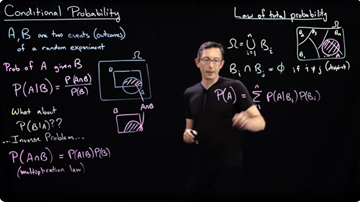
WATCH: Math proves Jesus is Messiah The Law of Total Probability
The Jerusalem Prophecy The
Prophecy (520 BCE): Zechariah 12:3 And in that day will I make
Jerusalem a burdensome stone for all people: all that burden themselves with it
shall be cut in pieces, though all the people of the earth be gathered
together against it. Fulfilment
(2,537 years after the prophecy was made): U.S. President
Donald Trump recognized Jerusalem as Israel's capital on December 6, 2017,
ordering the relocation of the U.S. Embassy from Tel Aviv to Jerusalem. While
this decision was welcomed by Israeli Prime Minister Benjamin Netanyahu, it
was rejected by the majority of world leaders and did not address the final
borders or status of Jerusalem, which remained to be negotiated between the
parties. In
the United Nations, 128 countries voted against Trump’s unilateral
decision. Thirty-five abstained, including five EU states, and other US
allies including Australia, Canada, Colombia and Mexico. Ambassadors from
several abstaining countries, including Mexico, used their time on the podium
to criticise Trump’s unilateral move. Nine supported Trump, including
the United States and Israel –voted against the resolution. The other
countries which supported Washington were Togo, Micronesia, Nauru, Palau,
Marshall Islands, Guatemala and Honduras. Other fulfilled prophecies 1.
The Destruction of Jerusalem and the Temple (Matthew 24:1-2; Mark
13:1-2; Luke 21:5-6) Prophecy: Jesus foretold the destruction of the Second Temple in Jerusalem. Fulfilment: The Second Temple was destroyed by the Romans in 70 AD under the command of Emperor Titus. This event is considered a direct fulfillment of Jesus' prophecy. 2.
The Birth of Jesus (Isaiah 7:14; Micah 5:2) Prophecy: The Messiah would be
born of a virgin in Bethlehem. Fulfilment: Christians believe
the birth of Jesus in Bethlehem, as described in the New Testament (Matthew
1:22-23 Luke 2:4-7), fulfilled this prophecy. 3.
The Crucifixion of Jesus (Psalm 22; Isaiah 53) Prophecy: Various Old Testament
passages describe suffering, humiliation, and death, which many Christians
interpret as pointing to the Messiah. Fulfilment: The crucifixion of
Jesus is considered the fulfilment of these prophecies. Psalm 22, for
example, describes scenes that Christians associate with Jesus' crucifixion,
such as "they pierced my hands and feet" (Psalm 22:16). 4.
The Fall of Babylon (Isaiah 13:19-22; Jeremiah 51:37) Prophecy: Babylon, a mighty empire, would fall and become
uninhabited. Fulfilment: Babylon fell to the Persian Empire in 539 BC, under
King Cyrus the Great. While the city itself continued to exist for some time,
it gradually became desolate, and today it lies in ruins. 5.
The Return of the Jews to Israel (Isaiah 11:11-12; Ezekiel 36:24;
Zechariah 10:6) Prophecy: The Jewish people
would return to their homeland after being dispersed. Fulfilment: The establishment of
the modern State of Israel in 1948 is seen as a fulfilment of this prophecy
by many Christians and Jews. The return of Jewish people to Israel is a key
event in biblical eschatology. 6.
The Rebuilding of the Temple in Jerusalem (Ezekiel 40-48) Prophecy: The prophecy in
Ezekiel speaks of a future temple that will be rebuilt in Jerusalem. Fulfilment: While the temple has
not yet been rebuilt in a literal sense, some interpret this prophecy in
various ways. Others believe that the return of Jews to Jerusalem and the
eventual rebuilding of the temple is still a future event. 7.
The Spread of the Gospel Worldwide (Matthew 24:14; Mark 13:10) Prophecy: Jesus predicted that
the gospel would be preached to all nations before the end of the age. Fulfilment: Christianity has
spread across the world, and today there are Christian communities on every
continent, making this prophecy widely regarded as fulfilled. 8.
The Destruction of Tyre (Ezekiel 26:3-21) Prophecy: The city of Tyre would
be destroyed and never rebuilt. Fulfilment: The ancient city of
Tyre, a Phoenician metropolis, was indeed destroyed in stages by
Nebuchadnezzar II and later by Alexander the Great. The modern city of Tyre
in Lebanon is not the same as the ancient city, fulfilling the prophecy of
its desolation. 9.
The Fall of Nineveh (Nahum 1:8-14) Prophecy: Nineveh, the capital
of the Assyrian Empire, would be destroyed. Fulfilment: Nineveh fell to a
coalition of Babylonians, Medes, and Scythians in 612 BC, just as prophesied
in the Book of Nahum. 10.
The End of the Age and the Signs of the Times (Matthew 24:3-14;
Luke 21:7-11) Prophecy: Jesus gave various
signs that would indicate the "end times," such as wars, famines,
earthquakes, and persecution. Fulfilment: Throughout history, many believers see events like world wars, natural disasters, and geopolitical upheavals as fulfilling these signs. These are “signs of the times”, natural occurrences. The statistical analysis in this book proves the prophecies. Its Confirmed! One country has started bringing in The Beast
System! It's confirmed. China has started bringing in the beast system. The most terrifying prophecy in the Bible isn't about some distant future. Revelation 13 isn't describing a system that's coming someday, but a system that's already being tested on 1.4 billion people right now. China's social credit system, the beast system, is described in Revelation 13.
|
Chapter Two Mathematical
proof of Biblical prophecy - happened, happening and
to happen A
time-tested mathematical method of determining 100% empirical proof, given a
set of data, and not anecdotal proof, is the Law of Probability. This law,
when applied, will give you a result between zero (0) and one (1) where zero
means 100% improbable and one means 100% probable. One can also determine the
extent of probability expressed as a power e.g. 1 in 10 to the nth power. The
key to all of this is knowing that the set of data carries between a 95% and
100% confidence level, highly accurate to totally accurate. In addition, to
ensure the truth of what is being said or claimed, one needs a preeminent
scholar to authenticate one’s proposition. In Tony Stone’s case, the late
Professor Peter Stoner, Chairman of the departments of mathematics and
astronomy at Pasadena City College, Chairman of the science division,
Westmont College; Professor Emeritus of Science, Westmont College; and
Professor Emeritus of Mathematics and Astronomy, Pasadena City College,
turned out to be his authenticator. ________________________________________________________________________________________________________ The
key question any atheist or agnostic asks is Jesus Christ just a man or the
Son of God, as spoken of in the Holy Bible? What evidence is there that he is
in fact the Son of God? However, before we proceed, there are two principles
that must be established. The first is authentication. we need to
authenticate the Holy Bible. The second is we need to authenticate Jesus
Christ. The third principle is interpretation. Two people can read the same
chapter and/or verse and come up with two different interpretations. To
negate any confusion, it is critical to clarify and draw the same
conclusions, and be totally congruent in our interpretations. Authentication
of the Holy Bible The
Bible is a collection of 66 different texts written by over 40 authors over a
2000-year period on three different continents and in many different cultures
and societies. The Bible was originally written in Hebrew, Aramaic and Koine Greek. The total number of chapters in the Bible is
1,189. There are 929 chapters within 39 books of the Old Testament and 260
chapters within the 27 books of the New Testament. There are a total of
31,102 verses. If the
Bible is truly Holy and divinely inspired, there would be something or things
that confirm this. The authenticity of the Holy Bible as divinely inspired is
key to our analysis, and that of Jesus Christ. The
Holy Bible, disregarding for a moment its religious purpose across Judaism
and Christianity, is not just a historical document but also a moral and
spiritual guide. Not only does the Bible include truthful spiritual content,
but also it records historical and geographical details with remarkable
accuracy. Archaeological evidence is consistently being found to authenticate
the Bible. There are ancient historical documents recording details of events
as described in the Holy Bible. But, is
there any single startling fact that authenticates the Bible? The answer is
yes! Chris
Harrison, an associate professor of Human-Computer Interaction at Carnegie
Mellon University in the USA, relates his story. “This set of visualizations
(below) started as a collaboration between Pastor Christoph Römhild and
myself in 2007. He had assembled a digital dataset of cross references found
in the King James Bible. Cross-references are conceptual links between
verses, connecting locations, people, phrases, etc. found in different parts
of the Bible. Cross-references are included in the margins or footnotes of
some Bibles. The pastor and I struggled to find an elegant solution to render
the data – 63,779 cross references in total. We set our sights on something
more beautiful than functional. At the same time, we wanted a visualization
that honoured and revealed the complexity of the Bible at every level – as
one leans in, smaller details should become visible. This ultimately led us
to the arc diagram you see below. Jordan Peterson has included this graphic
in his lecture series discussing how the Bible could be considered "the
first hyperlinked book". The
inspiration behind the Holy Bible is understood as coming from outside the
human realm of chance or random possibility. Christians, for example, would argue
that the Holy Spirit guided the writers, ensuring the coherence and divine
message. Mathematically, if you consider the Bible as a random sequence of
verses and ideas, the probability that it could emerge by chance as so
interconnected is extremely low, practically approaching zero. The number of
possible permutations of verses, ideas, and themes is astronomically high,
making the emergence of such a structured and coherent work by pure
randomness almost impossible. To give you a sense of the scale, this is far
beyond the number of atoms in the observable universe (which is estimated at
around 1080). Theologically,
for those who believe in divine inspiration, the question of
"chance" does not apply. Instead, the Bible’s message and coherence
are seen as the result of divine guidance and not random human effort. So, if
you're asking for the probability of such a complex and coherent text
emerging by chance, it would be something like 1 in a number so large that it
is practically zero i.e.10,00031.102
Chris Harrison, associate professor of
Human-Computer Interaction at Carnegie Mellon University in the USA Interpretation
of scripture Interpretation
is the act of explaining, reframing, or otherwise showing your own and other
people’s understanding of something. The key thing, in any investigation, is
correct interpretation and mutual understanding. Bear in mind that hard facts
clarify any misinterpretation and/or confusion. Jesus
Christ, born between 6–4 BCE, in Bethlehem and who died in 30 CE in
Jerusalem, an acknowledged Jewish leader, revered in Christianity as the Son
of God, or the Messiah, initiated what is today the biggest religion in the
world i.e. 2.38 billion people. Jesus Christ is regarded by most Christians
as being the second person in the Holy Trinity of God. God is the first,
while the Holy Ghost is the third. The
point that I would like to make is that, if Jesus Christ is the Messiah, the
Son of God, as we shall see, and we accept, and as it is stated in the Holy
Bible, then what Jesus Christ said/says is what is absolute truth - it is
that plain and simple. It needs no further interpretation. The
first commandment in the Book of Exodus 20:2-4, it says, “I am the Lord thy
God, which have brought thee out of the land of Egypt, out of the house of
bondage. 3 Thou shalt have no other gods before me. 4 Thou shalt not make
unto thee any graven image, or any likeness of anything that is in heaven
above, or that is in the earth beneath, or that is in the water under the
earth.” From
God’s mouth to your ears. there is only one God, and that is God, the I AM.
Jesus Christ is not God but the Son of God. Even Jesus Christ acknowledged
this truth. In the Gospels, Jesus refers to God as His "Father" or
"My Father" numerous times, emphasizing the intimate relationship
He has with God. 1.
In
the Gospel of Matthew, Jesus refers to God as His Father over 40 times,
especially in the context of prayer and teachings about God's care and
kingdom (e.g., Matthew 6:9, "Our Father in heaven"). 2.
In
the Gospel of Mark, Jesus mentions God as His Father about 20 times, with
notable examples in Mark 14:36 (Jesus calling God "Abba, Father" in
His prayer at Gethsemane). 3.
In
the Gospel of Luke, Jesus refers to God as His Father about 30 times. A key
reference is found in Luke 11:2 ("Father, hallowed be your name"
during the Lord's Prayer). 4.
In
the Gospel of John, Jesus mentions God as His Father around 100 times. Here,
Jesus frequently emphasizes His unique relationship with the Father,
especially in the "I am" statements (e.g., John 10:30, "I and
the Father are one" – obviously a figurative statement and not a literal
statement). Altogether,
in the four Gospels, Jesus refers to God the Father more than 150 times.
These references underscore His unique sonship and the relationship He shares
with God, which was central to His teaching and mission. The frequency and
emphasis on God as "Father" are especially prominent in John’s
Gospel. Let your
light so shine before men, that they may see your good works, and glorify
your Father which is in heaven. The
first commandment is why the Jews cannot accept Jesus as the Messiah. Some
Christians actually call Jesus God, which is incorrect. There are 100 verses
in the Holy Bible referring to Jesus sitting at the right hand of the father.
That being the case, Jesus cannot be God, but the Son of God. The
upshot of this all is that what Jesus said/says is absolute truth. And for
the woke, liberal and arrogant theologians, Jesus never once referred to
Mother God. There is no such thing. Just God the Father. The
Messianic Prophecies Isaiah
9:6 “a child is born”, served as a prophet for about 40 years between 740 BCE
and 700 BCE in the southern kingdom of Judea. In the Book of Isaiah 53:1-12,
he prophecies about the coming Messiah. That was 700 years+ before Jesus
Christ was born. In all, the count of 108 prophecies about the Messiah
typically refers to the collection of predictions found in the Old Testament
that Christian scholars have determined were fulfilled in the birth, life,
crucifixion and resurrection of Jesus Christ. These prophecies are often
cited to demonstrate that Jesus was the promised Messiah in Jewish tradition,
according to Christian belief. Key
Messianic Prophecies 1.
Birth
of the Messiah:
Virgin Birth (Isaiah 7:14): The Messiah would be born of a virgin. Fulfilled
in Matthew 1:22-23 with the birth of Jesus to Mary. Born in Bethlehem (Micah
5:2): The Messiah would be born in Bethlehem. Fulfilled in Matthew 2:1-6.
Descendant of David (Jeremiah 23:5-6): The Messiah would be a descendant of
King David. Fulfilled in Matthew 1:1-16. Born in the line of Jesse (Isaiah
11:1): The Messiah would come from the family of Jesse, the father of David.
Fulfilled in Matthew 1:1-16. 2.
The
Ministry of the Messiah:
Preceded by a messenger (Isaiah 40:3): A messenger would prepare the way for
the Messiah. Fulfilled in Matthew 3:1-3 with John the Baptist. Healing and
miracles (Isaiah 35:5-6): The Messiah would perform miracles, heal the sick,
and restore sight. Fulfilled in Matthew 11:4-5. A prophet like Moses
(Deuteronomy 18:15): The Messiah would be like Moses, a great leader and
prophet. Fulfilled in Acts 3:22. 3.
Character
and Actions of the Messiah: The Messiah would be a servant (Isaiah 42:1-4):
The Messiah would serve and not seek personal glory. Fulfilled in Matthew
12:17-21. The Messiah would bring light to the Gentiles (Isaiah 49:6): The
Messiah would be a light to the nations. Fulfilled in Luke 2:32. The Messiah
would be rejected by His people (Isaiah 53:3): The Messiah would be despised
and rejected by Israel. Fulfilled in John 1:11. The Messiah would be betrayed
(Psalm 41:9): The Messiah would be betrayed by a close friend. Fulfilled in Matthew
26:47-50 with Judas Iscariot. 4.
Sufferings
and Death of the Messiah:
The Messiah would suffer for the sins of others (Isaiah 53:3-5): The Messiah
would suffer and be wounded for the transgressions of others. Fulfilled in
Matthew 27:27-31. The Messiah would be crucified (Psalm 22:16-18): The
Messiah would be pierced, and His hands and feet would be nailed. Fulfilled
in John 19:34. The Messiah would be silent before His accusers (Isaiah 53:7):
The Messiah would remain silent when falsely accused. Fulfilled in Matthew
27:12-14. The Messiah would die as a sacrifice for sin (Isaiah 53:10-12): The
Messiah's death would be a sacrificial act to atone for the sins of the
people. Fulfilled in 1 Peter 2:24. 5.
Resurrection
and Ascension of the Messiah: The Messiah would rise from the dead (Psalm
16:10): The Messiah would not see decay but would rise from the dead.
Fulfilled in Book of Acts 2:31. The Messiah would ascend to heaven (Book
of Psalms 68:18): The Messiah would ascend to heaven after His work.
Fulfilled in Acts 1:9-11. 6.
The
Reign of the Messiah:
The Messiah would sit at the right hand of God (Book of Psalms 110:1):
The Messiah would reign at the right hand of God. Fulfilled in Book of
Mark 16:19. The Messiah would establish an eternal kingdom (Book of
Daniel 7:13-14): The Messiah’s kingdom would be eternal. Fulfilled in Book
of Luke 1:32-33. The Messiah would judge the nations (Isaiah 2:4): The
Messiah would judge between the nations and bring peace. Fulfilled in Book
of Revelation 19:15. These prophecies
represent the broad themes often included in the list of Messianic
prophecies. Some collections of prophecies will number them differently or
break them down into more specific fulfilments, sometimes going into
additional detail for each prophecy. Many scholars or theologians who focus
on the Messianic prophecies consider them as a comprehensive list, each of
which is fulfilled in the person and work of Jesus. The probability of any individual fulfilling all
108 prophecies traditionally associated with the Messiah is a highly debated
topic, and calculating an exact numerical probability is difficult. However,
many scholars, especially within Christian apologetics, have attempted to
estimate the likelihood based on mathematical probability theory. The
probability of fulfilling just eight (8) specific prophecies The determination by Professor Peter Stoner of
eight specific prophecies being fulfilled by Jesus is often seen as
definitive proof of Jesus being the Messiah. Here's a breakdown of how his
calculation works: 1.
The Virgin Birth (Isaiah
7:14) – Probability: 1 in 1,000 2.
Born in Bethlehem (Micah
5:2) – Probability: 1 in 200,000 3.
Descendant of David
(Jeremiah 23:5-6) – Probability: 1 in 100 4.
Miracles and Healings (Isaiah
35:5-6) – Probability: 1 in 1,000 5.
Betrayed for 30 pieces of silver
(Zechariah 11:12-13) – Probability: 1 in 1,000 6.
Crucified (pierced hands and feet) (Psalm
22:16-18) – Probability: 1 in 10,000 7.
Resurrection (Psalm
16:10) – Probability: 1 in 1,000 8.
Riding into Jerusalem on a donkey
(Zechariah 9:9) – Probability: 1 in 100 When we multiply the probabilities of each individual event happening,
we get an extremely small number. For example: Ø 1/1,000 ×
1/200,000 × 1/100 × 1/1,000 × 1/1,000 × 1/10,000 × 1/1,000 × 1/100 = 1
in 10^17 (1 in 100 quadrillion). This means that the probability of any one person
fulfilling just eight (8) prophecies, which are incredibly specific, is 1017
or about 1 in 100 quadrillion. Now, when considering the full 108 prophecies
that Jesus is known to have fulfilled, the probability becomes astronomically
small, almost zero. If we assume a similar level of improbability for each
additional prophecy, the number would continue to shrink drastically. If we
extend the same level of improbability to all 108 prophecies, the chance of
any one individual fulfilling all 108 prophecies becomes so infinitely small
that it is for all intents and purposes zero in terms of human possibility,
given the sheer number and specificity of the prophecies. And, although it's impossible to give an exact
number for the probability of Jesus fulfilling all 108 prophecies,
calculations like these are often used to illustrate the impossibility of any
ordinary human being able to fulfil so many specific prophecies, some even
before they were born and subsequently over the course of their life, unless
they were indeed the promised Messiah. Jesus Christ fulfilled all 108
prophecies 100%. Miracles performed Calculating the exact probability of Jesus performing 37 specific
healing miracles is complex, as it involves many variables and
uncertainties. However, we can discuss the concept of improbability in a
general sense. Factors to Consider:
If we assume a low but reasonable chance for each of these miracles,
say a 1 in 1,000 chance for any given healing (a conservative estimate), the
probability of Jesus performing 37 such miracles would be 1 in 10111. The 37 miracles of Jesus typically refer to
specific miraculous acts He performed as recorded in the four Gospels
(Matthew, Mark, Luke, and John). These miracles are significant because they
demonstrate His divine power and authority, and they served as signs of the
coming Kingdom of God. Below is a list of 37 distinct miracles attributed to
Jesus in the New Testament, categorized into various types: healing miracles,
exorcisms, control over nature, and resurrection miracles. Healing
miracles 1.
Healing a man with leprosy: Matthew 8:2-4; Mark
1:40-45; Luke 5:12-15 2.
Healing the servant of a Roman centurion: Matthew
8:5-13; Luke 7:1-10 3.
Healing Peter’s mother-in-law: Matthew 8:14-15;
Mark 1:29-31; Luke 4:38-39 4.
Healing many sick and oppressed in the evening:
Matthew 8:16-17; Mark 1:32-34; Luke 4:40-41 5.
Healing a paralyzed man (at Capernaum): Matthew
9:1-8; Mark 2:1-12; Luke 5:17-26 6.
Healing a woman who had been bleeding for 12
years: Matthew 9:20-22; Mark 5:25-34; Luke 8:43-48 7.
Healing a girl restored to life and a woman
healed (while on the way to Jairus’ house): Matthew 9:18-19, 23-26; Mark
5:21-43; Luke 8:40-56 8.
Healing two blind men: Matthew 9:27-31 9.
Healing a mute man possessed by a demon: Matthew
9:32-34; Luke 11:14 10.
Healing a man with a withered hand: Matthew
12:9-14; Mark 3:1-6; Luke 6:6-11 11.
Healing a centurion’s servant who was paralyzed:
Matthew 8:5-13; Luke 7:1-10 12.
Healing a blind man near Jericho (Bartimaeus):
Matthew 20:29-34; Mark 10:46-52; Luke 18:35-43 13.
Healing a blind man in Bethsaida: Mark 8:22-26 14.
Healing a man born blind: John 9:1-12 15.
Healing a deaf and mute man: Mark 7:31-37 16.
Healing a crippled woman bent over for 18 years:
Luke 13:10-17 17.
Healing a man with dropsy (a swelling of the
body): Luke 14:1-6 18.
Healing a blind man in Jericho: Mark 10:46-52;
Luke 18:35-43 19.
Healing the ear of a servant (Malchus) of the
high priest: Luke 22:50-51 Exorcisms
(casting out demons) 20.
Driving out an evil spirit from a man in a
synagogue: Mark 1:23-26; Luke 4:33-36 21.
Healing a man possessed by a demon (mute man):
Matthew 9:32-34; Luke 11:14 22.
Healing a boy possessed by an evil spirit
(epileptic boy): Matthew 17:14-18; Mark 9:14-29; Luke 9:37-42 23.
Casting out a demon from a Canaanite woman’s
daughter: Matthew 15:21-28; Mark 7:24-30 24.
Healing a demon-possessed blind and mute man:
Matthew 12:22-23; Luke 11:14-15 Miracles
over nature 25.
Turning water into wine at the wedding in Cana:
John 2:1-11 26.
Calming the storm: Matthew 8:23-27; Mark 4:35-41;
Luke 8:22-25 27.
Feeding 5,000 with five loaves and two fish:
Matthew 14:13-21; Mark 6:30-44; Luke 9:10-17; John 6:5-14 28.
Walking on water: Matthew 14:22-33; Mark 6:45-52;
John 6:16-21 29.
Feeding 5,000 with seven loaves and a few fish:
Matthew 15:32-39; Mark 8:1-10 30.
Healing a man born blind: John 9:1-7 Resurrection
miracles 31.
Raising a widow's son at Nain: Luke 7:11-17 32.
Raising Jairus’ daughter from the dead: Matthew
9:18-26; Mark 5:21-43; Luke 8:40-56 33.
Raising Lazarus from the dead: John 11:1-44 Other
miracles 34.
The miraculous catch of fish (at the Sea of
Galilee): Luke 5:1-11; John 21:1-14 35.
Paying the temple tax with a coin from a fish:
Matthew 17:24-27 36.
Cursing the barren fig tree: Matthew 21:18-22;
Mark 11:12-14, 20-21 37.
Healing a man who had been lame for 38 years:
John 5:1-15 These 37 miracles of Jesus cover a wide range of
supernatural acts, demonstrating His authority over sickness, nature, demons,
and even death. They are central to Christian theology, as they serve as
signs of His divine power and as demonstrations of His compassion, fulfilling
prophecies of the Messiah found in the Old Testament. What is even more extraordinary is all these
miracles were performed in front of witnesses, some were witnessed by large
crowds, while others were more private, but all pointed to the central
message of Jesus' ministry: that He was the Messiah, the Son of God, bringing
God's kingdom to earth. In the final analysis, the chance of performing 37 distinct,
improbable miracles, an extraordinarily miniscule probability number,
essentially zero for any ordinary human proves the divine nature and
authority of Jesus Christ. They were not mere coincidences or statistical
anomalies, but rather acts of divine interventions. Now, in
turning to the prophecies given us by Jesus Christ, as he and the disciples
exited the East Gate and later on the Mount of Olives, we are not going to
look at probability but actual events, the frequency of events, as these
prove that what Jesus Christ foretold has and is happening as we speak. And, as
Jesus often did, he used parables to answer questions. The reason he did this was to get people
to think. The Parable of the Fig Tree explains the timing, and the need to be
watchful, ever vigilant, reading the signs of the times, never lapsing into
complacency. In the Books
of Matthew 24 and Mark 13, it begs the question how, if Jesus was an ordinary
man, could speak with such authority, and clearly see the future, 1,989 years
ago? In the books
of Matthew 24 and Mark 13, the Parable of the Fig Tree says, “And as he went out of the temple, one of his disciples saith unto him,
Master, see what manner of stones and what buildings are here! And Jesus answering said unto him, Seest thou these
great buildings? There shall not be left one stone upon another that shall
not be thrown down. And as he sat upon the Mount of Olives over
against the temple, Peter and James and John and Andrew asked him privately, tell us, when shall these things be? And what shall be the sign when all these things shall be fulfilled? And Jesus answering them began to
say, take heed lest any man deceive you: For many
shall come in my name, saying, I am Christ; and shall deceive many. And when ye shall
hear of wars and rumours of wars, be ye not troubled: for such things must
needs be; but the end shall not be yet. For nation shall rise against nation, and
kingdom against kingdom: And there shall be earthquakes in diverse
places, and there shall be famines and troubles: these are the beginnings of sorrows. But take heed to yourselves: for they shall deliver
you up to councils; and in the synagogues ye shall be beaten: and ye shall be
brought before rulers and kings for my sake, for a testimony against them. And the gospel must first be
published among all nations. But when they shall lead you, and
deliver you up, take no thought beforehand what ye shall speak, neither do ye
premeditate: but whatsoever shall be given you in that hour, that speak ye:
for it is not ye that speak, but the Holy Ghost. Now the brother shall betray the
brother to death, and the father the son; and children shall rise up against
their parents, and shall cause them to be put to death. And ye shall be hated
of all men for my name's sake: but he that shall endure unto the end, the
same shall be saved. But when ye shall see the
abomination of desolation, spoken of by Daniel the prophet, standing where it
ought not, (let him that readeth understand,) then
let them that be in Judaea flee to the mountains: And let him that is on the
housetop not go down into the house, neither enter therein, to take anything
out of his house: And let him that is in the field not turn back again for to
take up his garment. But woe to them that are with child, and to them that give suck in
those days! And pray ye that your flight be not in the winter. For in those days shall be affliction, such as was not from the
beginning of the creation which God created unto this time, neither shall be.
And except that the Lord had shortened those days, no flesh should be saved:
but for the elect's sake, whom he hath chosen, he hath shortened the days. And then if any man shall say to
you, Lo, here is Christ; or, lo, he is there; believe him not: For false Christs and false prophets shall rise, and
shall shew signs and wonders, to seduce, if it were possible, even the elect. But take ye heed: behold, I
have foretold you all things. But in those days, after that tribulation, the sun
shall be darkened, and the moon shall not give her light, And the stars of
heaven shall fall, and the powers that are in heaven shall be shaken. And
then shall they see the Son of man coming in the
clouds with great power and glory. And then shall he send his angels, and
shall gather together his elect from the four winds, from the uttermost part
of the earth to the uttermost part of heaven. Now learn a parable of the fig tree; When her
branch is yet tender, and putteth forth leaves, ye
know that summer is near: So ye in like manner, when ye shall see these
things come to pass, know that it is nigh, even at the doors. Verily I say unto you, that this generation
shall not pass, till all these things be done. Heaven and earth shall pass away: but my words shall not pass away. But of that day and that hour knoweth no man, no, not
the angels which are in heaven, neither the Son, but the Father. Take ye
heed, watch and pray: for ye know not when the time is. For the Son of
man is as a man taking a far journey, who left his house, and gave
authority to his servants, and to every man his work, and commanded the
porter to watch. Watch ye therefore: for ye know not when the master of the
house cometh, at even, or at midnight, or at the cockcrowing, or in the
morning: Lest coming suddenly he find you
sleeping. And what I say unto you I say unto all, Watch. “ My logic held that I needed a reliable database of what Jesus said
would be the signs of the end times. The issue was to find one, if such a
database existed. The reason for this was to find a substantial statistical
deviation from the norm to confirm what Jesus has prophesied. It would have
to be a source of information that emerged after the dark ages and belonging
to an empire that straddled the globe. My answer came from Raymond Thomas
Dalio is an American investor and hedge fund manager, who served as co-chief
investment officer of the world's largest hedge fund, Bridgewater Associates.
He wrote a book titled The Changing World Order wherein
he tracked the rise and fall of empires over a 500-year period. First, we had
the Dutch then the British then the American empires and now the emerging
Chinese empire. But, given my interest in the earlier historic periods, I
focused on the Dutch colonial empire which lasted from 1595 to 1975, a total
of 380 years. Dutch colonies spanned Europe, South America, Africa, Asia and
the Pacific. In the town of Louvain, Brussels, and founded in 1425, the Université
Catholique de Louvain, did not realise
that one day they would be instrumental in collating the evidence to prove
the prophecies of Jesus Christ. Collecting data from around the world, they
compiled a comprehensive database of natural phenomena, from earthquakes to
heatwaves. After reading my request for access to their database, and why,
they provided me a copy of their entire database, which I analysed
over a period of months. Sifting through and classifying the data, I was able
plot and graph the timelines of these phenomena. The graphs, which you will
see, reveal the accuracy of the Christ prophecies. The Université Catholique de Louvain’s data
shows a regular, low frequency timeline graph for each of the classified
phenomena, from the 1600’s right up to 1940-1950 period. From there the
graphs climb at an abnormal statistical deviation. So, back to Jesus Christ’s prophecies. The first prophecy – the temple The Book
of Mark 13:2, it says, “And Jesus answering said unto him, see thou
these great buildings? There shall not be left one stone upon another that
shall not be thrown down.” This was the destruction of the second Jewish
Temple in 70 CE, in response to the Jewish uprising at the time. The Romans
packed the Temple inside and out with wood a set it alight. Subjected to that
heat, the blocks of sandstone from which the Temple was built exploded into
pieces – leaving not one block of stone upon another. This then was the
fulfillment of the first prophecy. The second prophecy – false
prophets The Book
of Mark 13:5-6, it says, “Take heed lest any man deceive you. For many
shall come in my name, saying, I am Christ; and shall deceive many.” By
2024 AD Christianity was reported to have 29.02% of the world population as
believers, 2.38 billion adherents, people who at least claimed to be
believers. 70,97% of the world’s population follow alternate faiths, or
simply remain atheists or agnostics. The Pew Research
Center found that the number of people, from around the world, who identified
as Christian, had since the 1990s, left Christianity to join the growing
ranks of adults who describe their religious identity as atheist, agnostic or
‘nothing in particular, or Islamic, which is the fastest growing religion in
the world with approximately 2,0 billion adherents. In the United States, 8
in 10 people say religion is losing influence in public life. Europe and the
Western world reflect a similar sentiment. Then there is communism. Around
one-third of the world's population lives under Communist governments who
prohibit any form of religious faith that places “God” above the state. One of the
more notable examples of false Christian prophets were the Disciples of
Christ’s whose Jonestown, Guyana massacre in 1978 resulted in the
suicide/murder of 912 men, women and children who died. Then there was the
Branch Davidians at Waco, Texas in 1993 where, of the eighty killed,
twenty-five children were among the dead. Surviving Branch Davidians believed
that David Koresh was God incarnate. Koresh himself believed that he was an
angel, an agent of God. Sixty members of Europe's Solar Temple cult were
induced to mass suicide in France and Switzerland in 1994. In 1997,
thirty-nine members of the Heaven's Gate cult including leader Marshall
Applewhite ingested a combination of vodka and drugs at Applewhite's
instruction, resulting in what the mother of one victim called "one
suicide and 38 murders." Members were convinced that the only way to
survive Earth being "recycled" in the year 2000 was to be picked up
by a UFO flying in the wake of the Hale-Bopp comet. Scientology faced
allegations of member suicides, deaths, and psychotic breaks. When Germany
refused to recognize Scientology in 1998 as a bona fide religious
organization, contending the cult a threat to democracy, the United States
accused Germany of "intolerance" and caused international
diplomatic tensions. How many
“false prophets” there are in the world is not exactly known. It is not the
sort of thing that generates formal statistics because of the difficulty in
identifying these surreptitious individuals. You will not recognise
them by what they look like but rather by what they do or ask you to do, as
we have read. However, the increase, worldwide, in the number of sects, cults
or what is now referred to, with a more neutral line, "new religious
movements" or "minority religions" has been substantial. While there are around 10,000
distinct religions in the world, over three-quarters of the global population
adheres to one of these four – Christianity (29%), Islam (24%), Hinduism
(15%), and Buddhism (7%). In South
Africa, as reported by local news Fin24, we get a grasp of the problem. “From
followers being sprayed with Doom (insecticide) to eating rat poison and
snakes, and now even being '"raised from the dead, South Africa has its
fair share of pastors and prophets who have employed unconventional methods
of worship and make extraordinary claims.” And, world over, these false
prophets continue to have throngs of followers in tow, people who stand firm
behind their spiritual leaders, despite ridicule, controversy and, in some
cases, allegations of serious crimes, including rape. For some
it’s just about money. The true name of Prophet Passion Java is unknown and
yet, with his “supernatural gifts”, he
changes and impacts the lives of millions across the globe. Zimbabwean born
Prophet Passion Java has been placed in the top ten ratings for most popular
and richest prophets in his country Zimbabwe, with a net worth of about US$50
million. He recently bought a yellow Lamborghini Aventa
for which he paid R9.1 million, and he lives in a pink mansion. His lifestyle
is quite contrary to that of Jesus Christ and closest disciples. Then we have
or had another wealthy pastor, Alph Lukau, who raised a man from the dead.
This was later proved to be a total scam. To date, we have had 24
Christian/Jewish claimants of being the Messiah, 9 Muslim claimants and 15
Zoroastrian and other claimants. Back in the day, and from the original five
main religions in the world, there are now more than 45,000 Christian
organizations (groups, branches and/or denominations) worldwide. And,
feminists teaching theology at some universities speak of “Mother God.” If
Jesus Christ is the Son of God, why then did he always speak of His “Father
in Heaven” and teach us the Lord’s Prayer? The are 150 verses in the Holy
Bible where Jesus Christ refers to God as “Father”, not “mother.” Clearly, the second of Jesus
Christ’s prophecies has been fulfilled, and is being fulfilled at this very
moment. The moral of this story is, be careful what you believe and who you
follow. The third prophecy – War and
conflict The Book of Mark 13:7-8, it
says, “And when ye shall hear of wars
and rumours of wars, be ye not troubled: for such
things must needs be; but the end shall not be yet. For nation shall rise against nation, and kingdom against kingdom.” For anyone
born in the 20th Century, war and conflict has been and still is a
constant factor in our lives. It is the product of proud and arrogant old men
and the blind stupidity of young men. In the final analysis, there is
something deeply offensive about old men starting wars in which young men
must fight and die. But it’s been going on in perpetuity and is a constant
reminder of the stupidity of old men. As the world
emerged from the dark ages and people like Christopher Columbus (1451-1506)
began to explore the earth, they colonized vast tracts of land, subjugating
millions across the globe. These people eventually sought independence from
colonial masters with millions dying in the ensuing wars and conflict. Tens
of millions have been wounded and maimed. The
International Institute for Strategic Studies (IISS) data shows that in 2024
the United States, NATO, China, Russia and Ukraine occupied the top positions
as the world’s top five defense spenders. Worse still is the threat of nuclear weapons. In analysing
US nuclear targets, South Africa is targeted 22 times, 12 military targets
and 10 urban targets. What threat could South Africa possible be to the
United States of America since it destroyed, under UN supervision, its
stockpile of six nuclear weapons? Insanity? No! Fear? Yes! Imagined? Mostly! The
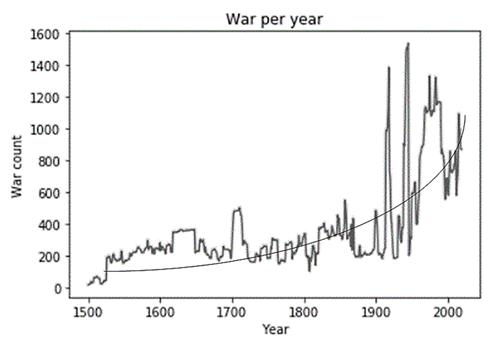
cumulative line shows increasing frequency with no real sign of it slowing
down. The increase in the number of wars is predominantly an increase of
smaller and smaller conflicts. This follows from the previously shown facts
that the number of war victims declined while the number of conflicts
increased. Jesus
Christ’s words, “And when ye shall hear of wars and rumours of wars,” clearly
fits the pattern we are seeing now. So, before our very eyes, we see the
fulfillment of His third prophecy.
War and conflict 2024 Most of the world’s conflicts are concentrated in Asia and Africa and
the most common forms are territorial disputes and civil wars. While
terrorism often strikes fear in people, only three of the world’s ongoing
conflicts are linked to terrorism, according to the Visual Capitalist. About
85% of all wars and conflict are happening in Africa and Asia. Table 1: War and conflict in 2024
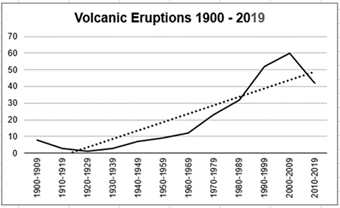
Source: Visual Capitalist Now, as we focus on the balance of His
prophecies, I will present you with a series of graphs that show how each of
the other prophecies are panning out. The data was sourced from the
International Disaster Database at the University Catholique
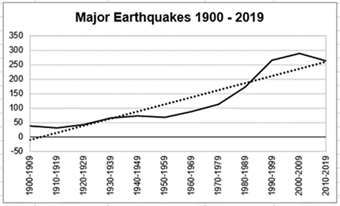
de Louvain in Brussels. Data is grouped or totalled in 10-year periods from
the year 1900 to 2029. Please note
that there is nothing shown for 2021 and 2022 because if it were shown, the
graph would show a steep decline as the years 2023 to 2029 have not passed
and this would create a false picture. The key then is to look at the
trendline. The fourth prophecy - Earthquakes The Book of Mark 13: 8, it
says, “And there shall be earthquakes in diverse places.” On 20th May,
526 CE, an earthquake hit Antioch, Syria, and left 250 000 people dead. Some
years later on the 24th January, 1556 CE, in the worst earthquake ever
recorded in history, 830 000 people died in Shaanxi, China. Today,
earthquakes are an everyday occurrence. Most are inconsequential, all are
important, some are deadly. Table 2:
Recorded earthquakes 2016 – 2024 ytd
Source: National Geophysical Data Center’s Globally Significant
Earthquake Database Using the National Geophysical Data Center’s Globally Significant Earthquake
Database maintained by NOAA, the National Centers for Environmental
Information, there have been an average of 1.14 earthquakes measuring 6.5 and
above on the Richter Scale per year since 10 CE. However, over the last 100
years the average has climbed to 13,87 earthquakes of 6.5 or higher magnitude
per year and in just the last 50 years this number has jumped to 15,7 per
year. Worse still, in the last 20 years the average per year has increased to
19. Clearly, one can see the pattern – it’s gone exponential. Millions have
died. Then there are volcanic eruptions. Do earthquakes trigger volcanic
eruptions? This question, posed to the US Geological Survey (USGS), elicited
this response, “Sometimes, yes. A few large regional earthquakes (greater
than magnitude 6) are considered to be related to a subsequent eruption or to
some type of unrest at a nearby volcano. However, volcanoes can only be
triggered into eruption by nearby tectonic earthquakes if they are already
poised to erupt.” There are
about 1,500 active and potentially active volcanoes around the world, aside
from the continuous belts of volcanoes on the ocean floor at spreading
centers like the Mid-Atlantic Ridge. On Average, about 50 or so erupt every
year, spewing steam, ash, toxic gases, and lava. Volcanologists’ attempts to
forecast volcanic eruptions, has proven to be nearly as difficult as
predicting earthquakes. Many pieces of evidence can mean that a volcano is
about to erupt, but the time and magnitude of the eruption are difficult to
pin down. But, given the increasing trend in volcanic eruptions, there is
definite reason for us to be concerned with future. Post 1500 CE
the number of small eruptions (VEI≤3) totals 5592 while the number of
large eruptions (VEI≥4) totals 203. Located around the Pacific Ocean is
the “Ring of Fire”, a series of volcanoes that stretch across 25,000 miles,
comprising of 75 percent of the world’s volcanoes. The Yellowstone Super Volcano A chunk of
the Yellowstone the size of Chicago has been pulsing. Scientists are asking
why? “It's an active volcano. It will erupt again,” said Michael Poland,
scientist-in-charge at the Yellowstone Volcano Observatory, a consortium of
eight organizations led by the U.S. Geological Survey. If it does it could
spew ash for thousands of miles across the United States, damaging buildings,
smothering crops, and shutting down power plants. But, it’s not
just the Ring of Fire or Yellowstone that is a concern. The “Campi Flegrei” is not only a restless caldera with a more
recent history of very large explosive eruptions and last erupted in March
1944, it is also smack in the middle of an area with over 6 million people,
and it's partially under the Bay of Naples. All these factors mean that if
the Campi Flegrei has a new bout of explosive
eruptions, the hazards could exceed those of any eruption in modern
history. One thing
for certain, we are in for a big one. Here are the twelve most dangerous
volcanoes around the world: Popular
Mechanics, in their article about the world’s volcanoes, wrote, “While there
are many active volcanoes around the world, experts generally classify the
most dangerous ones as those that are closest to highly populated areas, as
they can have the most-deadly effects.”
Source: Popular
Mechanics And while it
may seem like those with the most recent eruptions would be the most
dangerous, the opposite is true. When volcanoes go a long time without
erupting, they have more mounting pressure inside of them, leading to a
bigger explosion.” In 2024, twenty-two major volcanoes erupted around the world. The USA,
Japan, Nicaragua, Russia, Indonesia, New Zealand, Peru, Ecuador and the
Philippines are just a few that have and are still erupting in 2024.
According to the Smithsonian Institution Overall, there are 41 volcanoes in
continuing eruption status as of 8 December 2024. Table 4: List of the 41 volcanoes
with continuing eruptions as of 17 October 2024
Note: VWAR= Volcanic
Activity Report Source: Smithsonian
Institution Global Volcanism Programme Vesuvius volcano in the Gulf of Naples, Italy is the most dangerous
volcano in 2024. The reason being that Vesuvius' typical eruptions are very
explosive and the slopes of the volcano, and immediate area surrounding the
volcano, are extremely densely populated. The city of Naples is only about 20
km away from the volcano. Given its potential, Vesuvius could endanger more
than 3 million people, and wipe out the city of Naples. Mount Etna, the
most active volcano in Europe, erupted again in 2021 and the eruption on La
Palma in the Canary Islands on September 20, 2021 provided the world with
spectacular images of its eruption and subsequent lava flows that destroyed
1,000 hectares and forced the evacuation of 7,000 people. The Apolaki
Caldera was discovered in 2019 by Jenny Anne Baretto, a Marine Geologist and
her team found what appears to be the largest volcanic caldera on our planet.
With a massive 150 km wide diameter existing in the volcanic crater. The name
"Apolaki" means "giant lord" in Filipino, and is also the
name of the god of sun and war in some pantheons in Philippine mythology and
the indigenous Philippine folk religions. The volcano has been inactive for
millions of years. However, NASA is closely observing the volcano, which, if
erupted, would make Yellowstone look small in comparison. There is a
fairly high correlation between earthquakes and volcanic eruptions, which,
over the last 120 years have been increasing quite significantly. In selecting
the data for the two graphs below, a magnitude of 6.5 was used for
earthquakes and a Volcanic explosivity index (VEI) of 4 or greater was used
for volcanic eruptions.
Note: The University Catholique de Louvain’s data shows a regular, low
frequency timeline graph for each of the classified phenomena, from the 1600’s
right up to early 1900’s period. From there the graphs climb at an abnormal
rate of statistical deviation. If I included the 2020 to 2029-to-date data we
would see a steep decline as the data set is incomplete. Again, it is
clear the Jesus Christ’s prophecy has and is being fulfilled. And, according to the Book of Revelation
16:18, it speaks of a massive earthquake, and a volcanic eruption, that
is still to come. The fifth prophecy – Famine The Book of Mark 13:8, it
says, “And there shall be famines and
troubles: these are the
beginnings of sorrows.” The world
produces enough food to feed all of its 8 billion people, yet 733 million
people (1 in 11) go hungry every day. Hunger rates in Africa are especially
high, with 1 out of 5 people going hungry each day. 2.8 billion people around
the world cannot afford a healthy diet — 35% of the global population. In
low-income countries, 71.5% of people cannot afford a healthy diet. In
high-income countries, that figure drops to 6.3%. According to the 2024
Global Hunger Index, hunger levels are ranked Serious in 36 countries. The
2024 Global Hunger Index also rates hunger levels as Alarming in 6 countries:
Burundi, Chad, Madagascar, Somalia, South Sudan, and Yemen. The number of
people experiencing hunger has gone up by approximately 152 million since
2019. As of this writing, the Integrated Food Phase Classification (IPC)
estimates that 1.33 million people around the world are experiencing famine
or famine-like conditions. Half of all child deaths are linked to
malnutrition. 9 million people die from hunger-related causes every year;
many are children under the age of 5. Droughts are becoming more frequent and lasting longer as climate change
increases global temperatures and makes water availability more
unpredictable. Droughts are up by nearly 30% since 2000 – in both number and
duration – compared with the previous 20-year period, The UN says in its 2022
Drought in Numbers report.
Source of
data: "EM-DAT: The OFDA/CRED International Disaster Database, Note: The University Catholique de Louvain’s data shows a regular, low
frequency timeline graph for each of the classified phenomena, from the
1600’s right up to early 1900’s period. From there the graphs climb at an
abnormal rate of statistical deviation. If I included the 2020 to 2029-to-date
data we would see a steep decline as the data set is incomplete. Across Africa the landscape is changing. Droughts, heat stress and
flooding have led to a reduction in crop yields and livestock productivity.
The observable effects of climate change on water resources in Africa
include: flooding, drought, change in distribution of rainfall, drying-up of
rivers, melting of glaciers and the receding of bodies of water. Entire
economies will suffer when the water levels of Africa's huge rivers drop. The Hoover Institute, it its report on climate change and Africa, says,
“Africa is often described as the continent most at risk to the negative
effects of climate change, both because of the expected change itself and
because of the perceived lack of capacity of Africans and their governments
to adapt. Temperatures in Africa have risen, rainfall patterns changed, and
warming will continue with large, but largely uncertain impacts on rainfall.” Drought in western United States in 2021 was a continuation of the
severe drought in 2020. The unusually dry conditions were accompanied by
excessive heat, both in 2020 and 2021. In South Africa, the drought that began in 2019, as the new wet season
had just started, classified as a level 2 Red-Class event, continued through
2020 and into early 2021. The City of Cape Town was the first major city in
the world to run out of water. Climate change increases the odds of worsening drought in many parts of
the world, especially the western regions of continents, which we have seen
and will see. The Book of Revelation 16:9 speaks
of the Earth being scorched by intense heat, so there is more to come. Given the
exponential increase in droughts during the second half of the 20th
century, and following the same pattern as previous prophecies, with the
anticipated effects of climate change, a clear indication is given of the
fulfillment of this prophecy. Then there is famine caused by war. The Forbes magazine says tens of
millions of people, from Europe to Asia, Africa to the Middle East, are
expected to go hungry in 2023 due to a grim combination of factors made
significantly worse by Russian President Vladimir Putin’s unprovoked war in
Ukraine. The conflict, which involves two countries that together produce
nearly one-third of the world’s wheat, helped push the grain’s global price
up 21% in just the 10 days that ended March 3, 2022. Extreme weather, such as
persistent drought in North America, high fuel costs, fertilizer prices
through the roof and the need to feed an increasing number of refugees
displaced by war and climate change will contribute to the menace of growing
hunger in 2022. The sixth prophecy – Pestilences Health
experts say we are living in an explosive new age of infectious diseases. The
emergence of “super” bugs, drug resistant bacteria, AIDS, the Ebola virus, the Nipah virus, animal-to-human
diseases such as monkey pox, SARS and COVID-19. As of April 13,
2024, there were 704,753,890 Coronavirus cases with 7,010,681deaths. What else will come out of
laboratories like China’s Wuhan lab, especially with people like Anthony
Fauchi, who fortunately, is no longer around. At its worst, in January 2021,
an average of over 14,000 people per day died. And yet, Wuhan continues to
experiment with biological weapons. Ironically, China’s COVID-19 infection
rate skyrocketed to over 28,000 per day, as at 15 April 2022, while the rest
of the world saw a strong decline, but was still alarmingly high. COVID is
not included in the graph below.
Source of
data: "EM-DAT: The OFDA/CRED International Disaster Database, Note: The University Catholique de Louvain’s data shows a regular, low frequency
timeline graph for each of the classified phenomena, from the 1600’s right up
to early 1900’s period. From there the graphs climb at an abnormal rate of
statistical deviation. If I included the 2020 to 2029-to-date data we would
see a steep decline as the data set is incomplete. According to
the World Health Organisation (WHO), we are no
closer to curing or even controlling existing diseases such as cancer,
malaria and tuberculosis. Malaria claims the lives of over a million people
each year and it infects another 300 million worldwide. Tuberculosis has
proven to be an even deadlier disease that kills over two million people
every year. One third of the global population is afflicted by this plague.
Collectively, Africa is by far worst off. Ebola: The first reported outbreaks
occurred in 1976 in the DRC and in an area of the Sudan situated on the Ebola
River. The disease has a death rate of up to 90%. An Ebola epidemic has been
growing in Africa since mid-2018. This outbreak follows the devastating Ebola
epidemic that swept through West Africa between 2014 and 2016, resulting in
more than 28,600 infections and 11,000 deaths. The latest epidemic’s first
case was reported in the Democratic Republic of the Congo (DRC) in August
2018. Since then, more than 2,264 people have died. The WHO reported that the
outbreak crossed national borders into Uganda in late June 2019. HIV/AIDS: The WHO global HIV statistics
reveal that 39.9 million [36.1 million–44.6 million] people globally were
living with HIV in 2023. Of these, 1.3 million [1 million–1.7 million] people
became newly infected with HIV during 2023. An estimated 630 000 [500 000–820
000] people died from AIDS-related illnesses in the year while 30.7 million
people [27–31.9 million] were accessing antiretroviral therapy in 2023. Since
the start of the epidemic, 42.3 million [35.7 million–51.1 million] people
have died from AIDS-related illnesses. Malaria: In 2022, an estimated 249
million cases of malaria occurred worldwide. Most malaria cases in 2022 were
in Africa (232 million or 93%), followed by South-East Asia Region with 3.4%
of the cases and the Mediterranean Region with 2.1%. Most cases of malaria
occur in sub-Saharan Africa, Nineteen
countries in sub-Saharan Africa and India carried almost 85% of the global
malaria burden. Six countries accounted for more than half of all malaria
cases worldwide: Nigeria (25%), the Democratic Republic of the Congo (12%),
Uganda (5%), and Côte d’Ivoire, Mozambique and Niger (4% each). Tuberculosis: The global rise in the number
of people falling ill with TB (incident cases) that started during the
COVID-19 pandemic has slowed and started to stabilize. The total was 10.8
million (95% uncertainty interval [UI]: 10.1–11.7 million) in 2023, a small increase
from 10.7 million in 2022 although still much higher than 10.4 million in
2021 and 10.1 million in 2020. Most of the
people who develop TB disease each year are in 30 high TB burden countries,
which accounted for 87% of the global total in 2023. Five countries accounted
for 56% of the worldwide total: India (26%), Indonesia (10%), China (6.8%),
the Philippines (6.8%) and Pakistan (6.3%). In 2023, 55% of people who
developed TB were men, 33% were women and 12% were children and young
adolescents. Seasonal Flu: Up to 650 000 deaths annually
are associated with respiratory diseases from seasonal influenza, according
to new estimates by the United States Centers for Disease Control and
Prevention (US-CDC), the World Health Organization and global health partners.
This marks an increase on the previous global estimate of 250 000 – 500 000,
which dates from over ten years ago and covered all influenza-related deaths,
including cardiovascular disease or diabetes. The new
figures of 290 000 – 650 000 deaths are based on more recent data from a
larger, more diverse group of countries, including lower middle-income
countries, and exclude deaths from non-respiratory diseases. And we had
COVID-19 spreading like wildfire. Since 2019 we have had 346 million
infections and 5,59 million deaths worldwide. The
beginnings of sorrows In the Book
of Matthew 24:8-13, it says, “All these (things) are the beginning of
sorrows,” which implies there are other sorrows happening, such as
storms, floods, landslides, plagues, extreme temperatures and wildfires. If
this then is the case, should we see similar patterns of occurrence as we
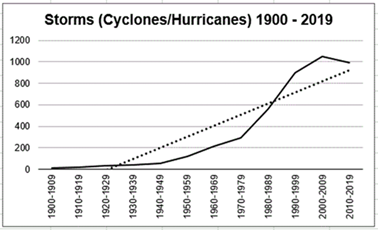
have seen in the previous prophecies? We do! Storms Tropical
storms, cyclones, hurricanes, typhoons are all basically the same thing, but
are given different names depending on where they appear. Hurricanes are
tropical storms that form over the North Atlantic Ocean and Northeast
Pacific. Cyclones are formed over the South Pacific and Indian Ocean.
Typhoons are formed over the Northwest Pacific Ocean.
Hurricane
Katrina wreaked havoc along the U.S. Gulf Coast on August 29, 2005 as a
Category 3 storm, leaving 1,833 dead, driving more than 1 million people from
their homes and forcing more than 300,000 children to enroll in new schools
around the country, sometimes very far from the communities they once knew.
So far, since the year 1900, 1 400 104 have died while 1 391 978 were
injured.
Source of
data: "EM-DAT: The OFDA/CRED International Disaster Database, University Catholique de Louvain, Brussels, Bel." Data version:
v11.08 In 2020 Note: The University Catholique de Louvain’s data shows a regular, low
frequency timeline graph for each of the classified phenomena, from the
1600’s right up to early 1900’s period. From there the graphs climb at an
abnormal rate of statistical deviation. If I included the 2020 to 2029-to-date
data we would see a steep decline as the data set is incomplete. Floods Over the last 100 years there has
been a huge increase in the number of floods around the world. Experts say
this is a direct result of the climate crisis that was predicted before 1990.
The rising global temperatures are
increasing the likelihood of storms, raising sea levels and amassing more
moisture in the air which are increasing the propensity and intensity of
floods. The simplest explanation for
flooding is heavy rains, overflowing rivers, broken dams, landslides and
chunks of glaciers breaking off, inadequate urban drainage basins, storm
surges and tsunamis, channels with steep sides, a lack of vegetation, melting
snow and ice. Just go on to Youtube.com to see the
amazing frequency of flooding all around the world – from Central America to
China. Damage has been in the billions of dollars, not to forget the loss of
life. As of 2020, 6 991 079 people
have died and 1 372 136 were injured.
Source of
data: "EM-DAT: The OFDA/CRED International Disaster Database, University Catholique de Louvain, Brussels, Bel." Data version:
v11.08 In 2020 Note: The University Catholique de Louvain’s data shows a regular, low
frequency timeline graph for each of the classified phenomena, from the
1600’s right up to early 1900’s period. From there the graphs climb at an
abnormal rate of statistical deviation. If I included the 2020 to 2029-to-date
data we would see a steep decline as the data set is incomplete. Landslides Landslides are
caused by disturbances in the natural stability of a slope. They can
accompany heavy rains or follow droughts, earthquakes, or volcanic eruptions.
Mudslides develop when water rapidly accumulates in the ground and results in
a surge of water-saturated rock, earth, and debris.
Source of
data: "EM-DAT: The OFDA/CRED International Disaster Database, Note: The University Catholique de Louvain’s data shows a regular, low
frequency timeline graph for each of the classified phenomena, from the
1600’s right up to early 1900’s period. From there the graphs climb at an
abnormal rate of statistical deviation. If I included the 2020 to 2029-to-date
data we would see a steep decline as the data set is incomplete. Globally,
the highest numbers of fatalities from landslides occur in the mountains of
Asia and Central and South America, as well as on steep islands in the
Caribbean and Southeast Asia. Wherever slopes are steep, there is a chance
that they will fail. Youtube.com shows that the frequency of landslides is
increasing. Some of these landslides are absolutely spectacular. Once again
there has been billions of dollars in damage, and too many lives lost. Since 1900,
205 761 have died while 64 609 had to be rescued and receive medical
treatment. The World Bank’s Global Landslide Hazard Report carries within its
pages shocking statistics of rain induced and earthquake induced landslides.
On average, 948 people die every year in landslides. Plagues Plague is
caused by the bacteria Yersinia pestis, a zoonotic bacteria
usually found in small mammals and their fleas. People infected with Y.
pestis often develop symptoms after an incubation period of one to seven
days. There are two main clinical forms of plague infection: bubonic and
pneumonic. Bubonic plague is the most common form and is characterized by
painful swollen lymph nodes or 'buboes'. Plague is transmitted between
animals and humans by the bite of infected fleas, direct contact with
infected tissues, and inhalation of infected respiratory droplets. Plague can
be a very severe disease in people, with a case-fatality ratio of 30% to 60%
for the bubonic type, and is always fatal for the pneumonic kind when left
untreated. Antibiotic treatment is effective against plague bacteria, so
early diagnosis and early treatment can save lives. Currently, the three most
endemic countries are the Democratic Republic of the Congo, Madagascar, and
Peru. Desert
locusts, or Schistocerca Gregaria, have often been called the world's most
devastating pest, and for good reason. Fueling the locusts' destruction is a
bounty of vegetation following unusually heavy rains. All that food means the
landscape can support a huge number of rapidly breeding insects. Farmers
throughout East Africa face food shortages, as the plague consumes both crops
in the field and in storage. In 2020,
with hundreds of billions of locusts tearing through farmland, it was worst
outbreak to strike East Africa in decades. Depending on species and
environmental conditions, in Africa, there are generally 3-5 generations per
year. Locusts often form dense bands of flightless nymphs and swarms of
winged adults.
Source of
data: "EM-DAT: The OFDA/CRED International Disaster Database, Note: The University Catholique de Louvain’s data shows a regular, low
frequency timeline graph for each of the classified phenomena, from the
1600’s right up to early 1900’s period. From there the graphs climb at an
abnormal rate of statistical deviation. If I included the 2020 to 2029-to-date
data we would see a steep decline as the data set is incomplete. Locusts
swarmed in large numbers in dozens of countries, including Kenya, Ethiopia,
Uganda, Somalia, Eritrea, India, Pakistan, Iran, Yemen, Oman and Saudi
Arabia, and now in 2021 in South Africa. Brown locust swarms have been
spotted in parts of South Africa’s Northern Cape, Eastern Cape and Western
Cape. In August 2021, Niger, Chad, Somalia, Ethiopia, Yemen and Saudi Arabia
experienced small locust swarms, And, after seventeen years in the ground,
billions of Brood X cicadas emerged from the ground in May 2021 in fifteen
states in the USA. In March 2022, farmers in the Northern Cape, Western Cape
and Eastern Cape Karoo struggled to control the locust swarms that damaged
and consumed thousands of hectares of grazing land. The swarm was described
as being of biblical proportions. Interestingly,
93 538 people have died as a direct result of the locust plagues over the
last 100 years. Extreme
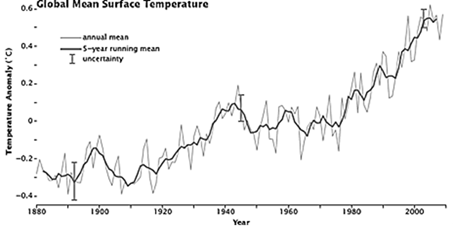
temperatures Average temperatures
at the Earth's surface are increasing and are expected to continue rising.
Because climate change can shift the wind patterns and ocean currents that
drive the world's climate system, some areas are warming more than others,
and some have experienced cooling. As
Earth's oceans grow warmer, they evaporate more moisture into the atmosphere
- about 4 percent more since 1970, according to recent data. These two
factors, rising temperatures and increased moisture in the atmosphere, make
the chances for extreme weather that much greater from here on in. The maximum
body temperature a human can survive is 42.3oC or 108.14oF.
At higher temperatures the body turns into scrambled eggs: proteins are
denatured and the brain gets damaged irreparably. In the
worst-case scenario, in which emissions double by 2050, temperatures would
rise 2.4 degrees above pre-industrial levels between 2041 and 2060.
Image
Credit: Earth Observatory, EOS Project Science Office,
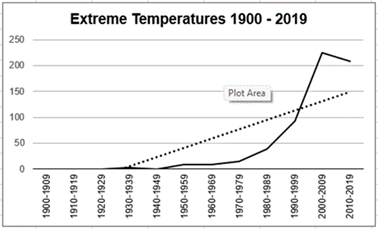
Source of
data: "EM-DAT: The OFDA/CRED International Disaster Database, Note: The University Catholique de Louvain’s data shows a regular, low frequency
timeline graph for each of the classified phenomena, from the 1600’s right up
to early 1900’s period. From there the graphs climb at an abnormal rate of
statistical deviation. If I included the 2020 to 2029-to-date data we would
see a steep decline as the data set is incomplete. More than
458 weather stations around the world beat their all-time highest temperature
records in 2021. Of these new regional temperature records, 54 were cold
extremes. Maximiliano Herrera who keeps track of extreme weather around the
world, and publishes an annual list of records broken in the previous year,
said that 2021 will probably be one of the hottest years in history. On March 18
2022, it measured 70 degrees warmer than normal in eastern Antarctica.
Scientists were flabbergasted. Now they are tracking new anomalies that are
growing in the atmosphere, and the oceans, anomalies that will change the
weather patterns as we head deeper into the year. So far, since 1900, 192 793 have died while
2 051 476 had to receive medical treatment. Wildfires Research
shows, with climate change, that it creates warmer, drier conditions, along
with droughts, longer fire seasons that are boosting the increase in wildfire
risk. Wildfires
are uncontrolled fires in forests, grasslands, brushlands or croplands, and
usually started by lightning strikes. Each year, these fires consume millions
of acres of land, destroying thousands of homes and properties. Most
wildfires occur in California, Australia and South Africa. In 2021, in the
US, more than 7.6 million acres burned across California. In Europe, it was
the second worst wildfire season on record. In 2022, Colorado and California
were once again victims of wildfires. Australia in 2022 is unlikely to
experience large wildfires following the devastation caused in the 2020-2021
fire season. In January 2022, firefighters battled to contain raging fires in
South Africa’s Cape Winelands. And so, it goes on. Wildfires
emit between 5 and 30 tonnes of carbon per hectare. Globally, wildfires
produce between 1.75 and 13.5 billion metric tonnes of carbon, contributing
to global warming on a massive scale. In 2012, It was estimated that every
person on the planet produced 103 kilograms of carbon dioxide for the year.
With 7.1 billion people on Earth then and 7.8 billion people in 2020 that
would account for an increase of 700 million people or 71,75 billion tons of
carbon dioxide for the year. Global warming is a reality. Wildfires
and volcanic activities affected 6.2 million people in the 20 years between
1998 and 2018 with 2400 attributable deaths worldwide from suffocation,
injuries, and burns. Carbon dioxide levels are higher than they've been at
any point in the last 3.6 million years. ... NOAA reported that the global
average of atmospheric CO2 hit 412.5 parts per million (ppm) in
2020, a rise of 2.6 ppm from 2019, the fifth-largest increase since they
began measuring atmospheric CO2 levels 63 years ago. The rise
happened despite an estimated 7% reduction in global emissions due to the
pandemic. Pieter Tans, the senior scientist at NOAA's Global Monitoring
Laboratory, estimates that 2020 would have been a record-breaking year had it
not been for the Covid-19 pandemic.
Image Credit: Ana Raquel Diaz
Vazuquez, Research Gate In 2022,
in Europe, North Africa, and the Middle East, Albania, Algeria, Croatia,
Cyprus, Czech Republic, France, Germany, Greece, Italy, Lebanon, Malta,
Morocco, Portugal, Romania, Slovenia, Spain, Tunisia, Turkey, and the United
Kingdom recorded over 3,700 acres of forest destroyed with one person was
killed. According to European Forest Fire Information System, almost 80,000
acres burned in 44 wildfires as of Nov. 20, 2022. A time like never before Never before
in human history, have we witnessed so much suffering from war, earthquakes,
hunger, starvation, epidemics and other disasters. it is quite clear that the
prophecies of Christ are 100% accurate, have been fulfilled and are being
fulfilled as you read this book. In 2020,
there were a total of 416 natural disasters events worldwide. The Asian
Pacific region experienced the second highest number of natural disasters,
most likely due to its size and susceptibility. As reported
by EOS (Earth Observing System), your friendly satellite in the sky, in 2021,
about 70 volcanic eruptions and 148 earthquakes with a magnitude of 6 or more
were recorded. A third of
them were new new. Some natural disasters turned
out to be record-breaking in terms of both power and damage. Hurricane Ida
left over 1 million people without power, tornadoes tore across the American
Midwest, volcanoes forced people to evacuate their homes in Haiti, La Soufrière and Cumbre Vieja, wildfires covered the
American West, Russia, Turkey and Greece, and unusual flooding wreaked havoc
in Central Europe, Australia, India and Sri Lanka.
Source of
data: "EM-DAT: The OFDA/CRED International Disaster Database, Note: The University Catholique de Louvain’s data shows a regular, low
frequency timeline graph for each of the classified phenomena, from the
1600’s right up to early 1900’s period. From there the graphs climb at an
abnormal rate of statistical deviation. If I included the 2020 to
2029-to-date data we would see a steep decline as the data set is incomplete. With human
emissions of greenhouse gases increasing Earth's temperature, we're seeing
changes in those characteristics: wildfire and drought seasons are
lengthening, hurricanes and rainfall are becoming more intense, and coastal
flooding is increasing. An
interesting correlation, in connecting the dots, is the trajectory the world
is on in relation to the prophecies of the Holy Bible. I would recommend
that, if you haven’t, read the New Testament and see these correlations for
yourself. So, together
with the prophecies about Jesus Christ, His birth, life, crucifixion and
resurrection as well as the miracles he performed, proven using the Law of
Probability, any doubts in your mind as to whether he is the Messiah need to
be erased. He is the Messiah and he is coming back – soon. And yes, there
will be a rapture, a seven-year period of tribulation and a battle at
Armageddon. To hope that there will not be is a fool’s dream. HOME | CONTENTS | NEXT CHAPTER |
||||||||||||||||||||||||||||||||||||||||||||||||||||||||||||||||||||||||||||||||||||||||||||||||||||||||||||||||||||||||||||||||||||||||||||||||||||||||||||||||||||||||||||||||||||||||||||||||||||||||||||||||||||||||||||||||||||||||||||||||||||||||||||||||||||||||||||||||||||||||||||||||||||||||||||||||||||||||||||||||||||||||||||||||||||||||||||||||||||||||||||||||||||||||||||||||||||||||||||||||||||||||||||||||||
|
|
|
||||||||||||||||||||||||||||||||||||||||||||||||||||||||||||||||||||||||||||||||||||||||||||||||||||||||||||||||||||||||||||||||||||||||||||||||||||||||||||||||||||||||||||||||||||||||||||||||||||||||||||||||||||||||||||||||||||||||||||||||||||||||||||||||||||||||||||||||||||||||||||||||||||||||||||||||||||||||||||||||||||||||||||||||||||||||||||||||||||||||||||||||||||||||||||||||||||||||||||||||||||||||||||||||||
|
|
© Copyright 2025 Tony Stone, South Africa |
||||||||||||||||||||||||||||||||||||||||||||||||||||||||||||||||||||||||||||||||||||||||||||||||||||||||||||||||||||||||||||||||||||||||||||||||||||||||||||||||||||||||||||||||||||||||||||||||||||||||||||||||||||||||||||||||||||||||||||||||||||||||||||||||||||||||||||||||||||||||||||||||||||||||||||||||||||||||||||||||||||||||||||||||||||||||||||||||||||||||||||||||||||||||||||||||||||||||||||||||||||||||||||||||||